
Activities
Every competition, training camp and outreach event since the team was formed — newest first. Filter by type or by programme line.
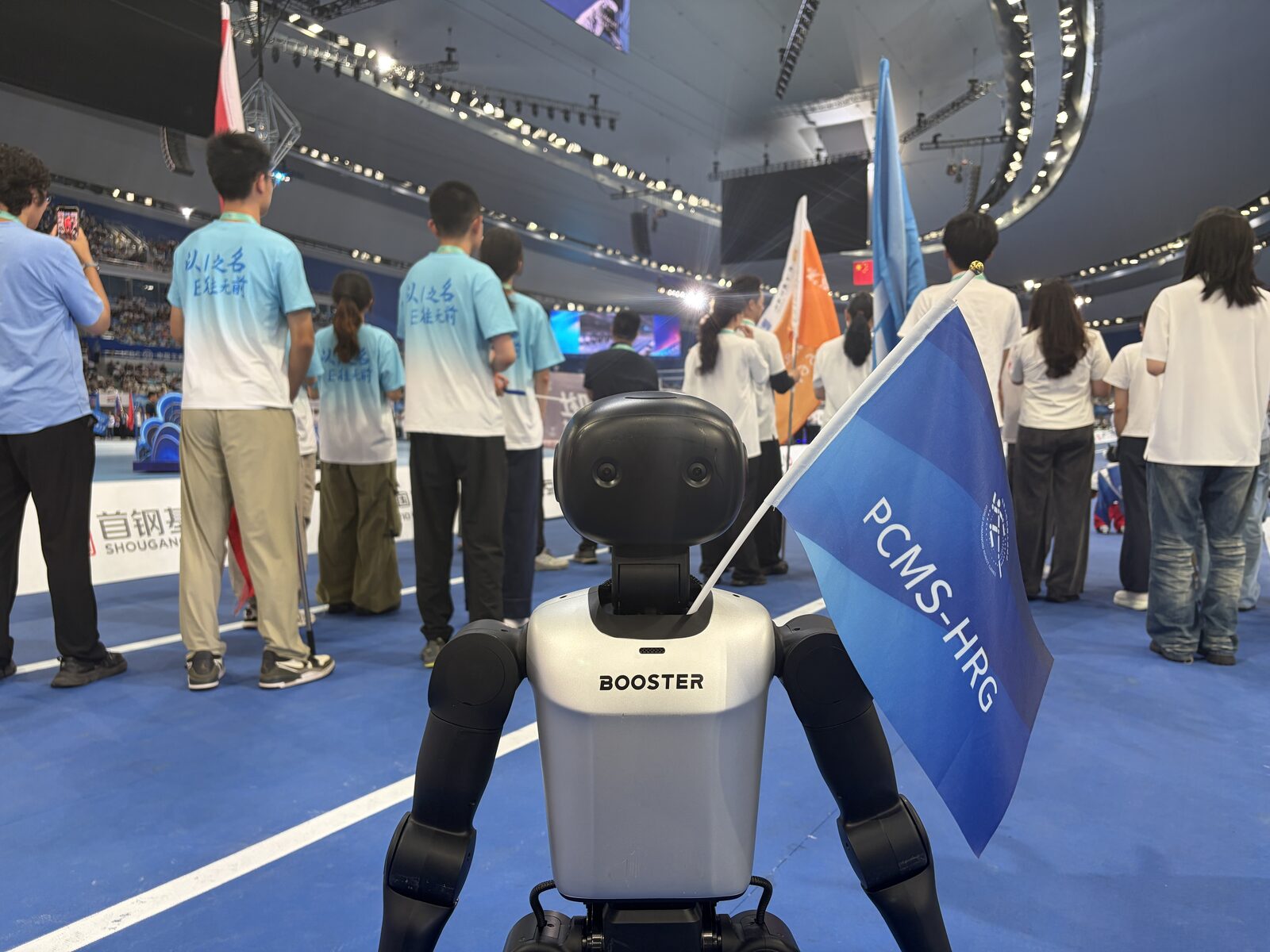
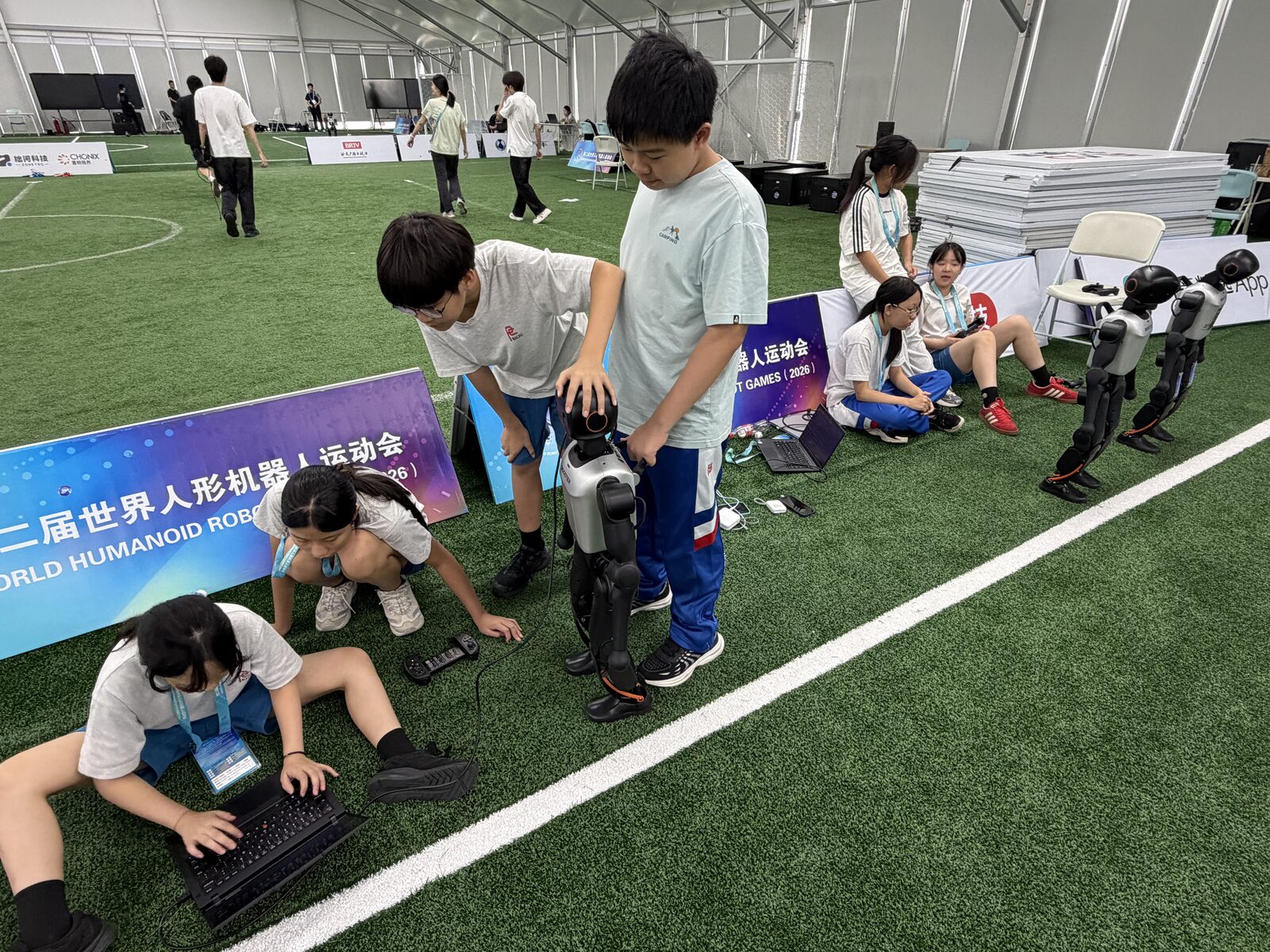
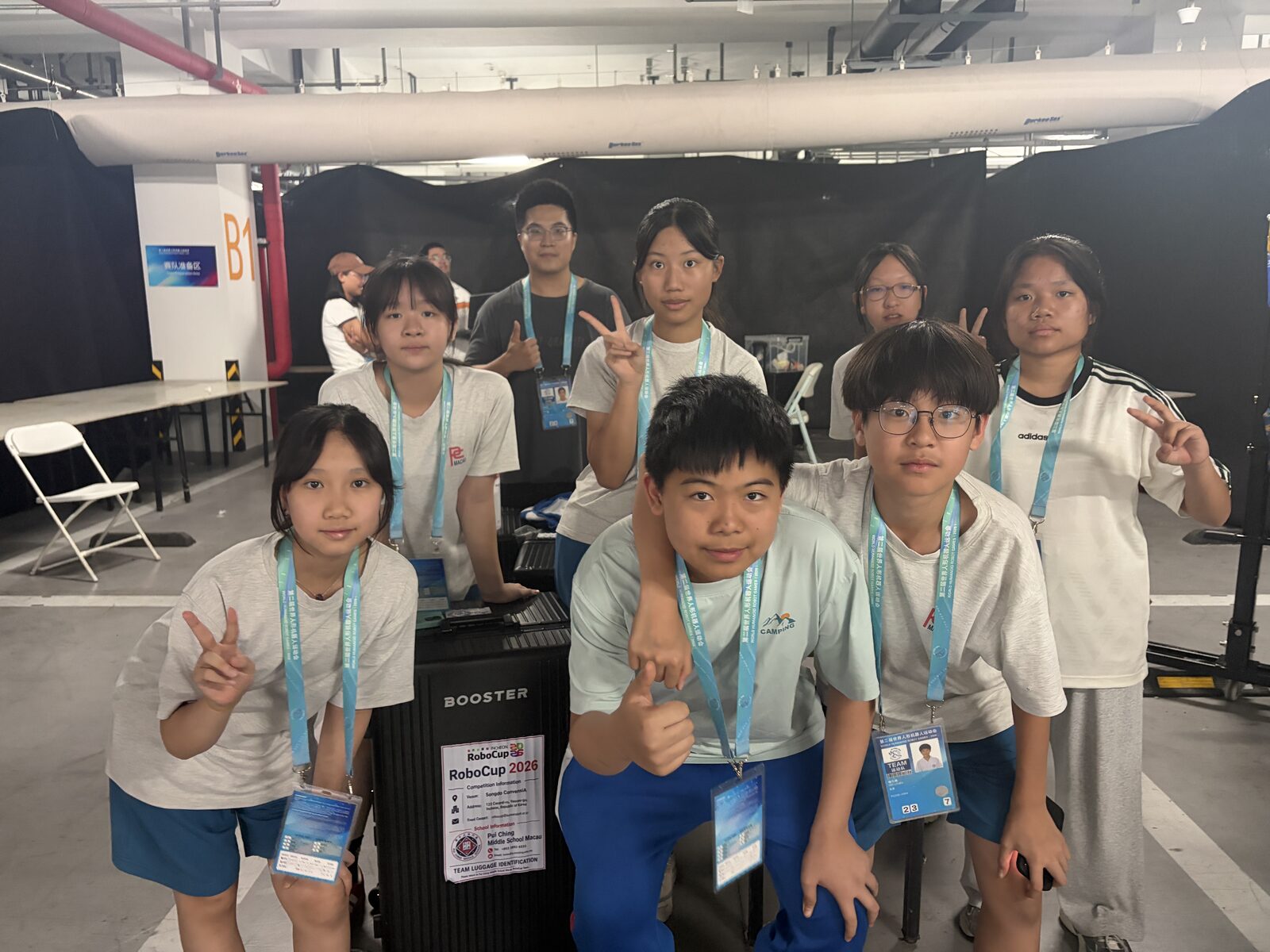
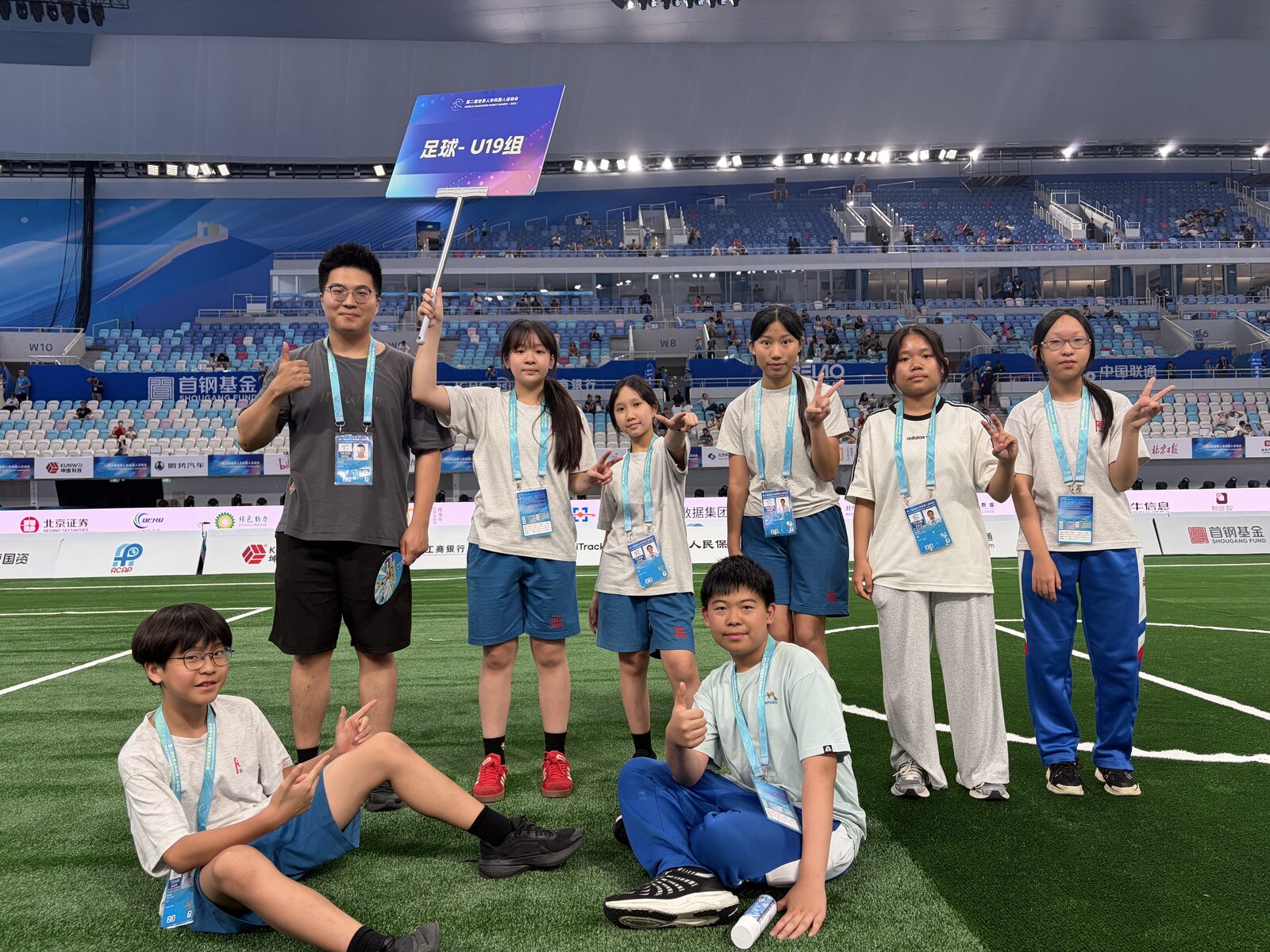
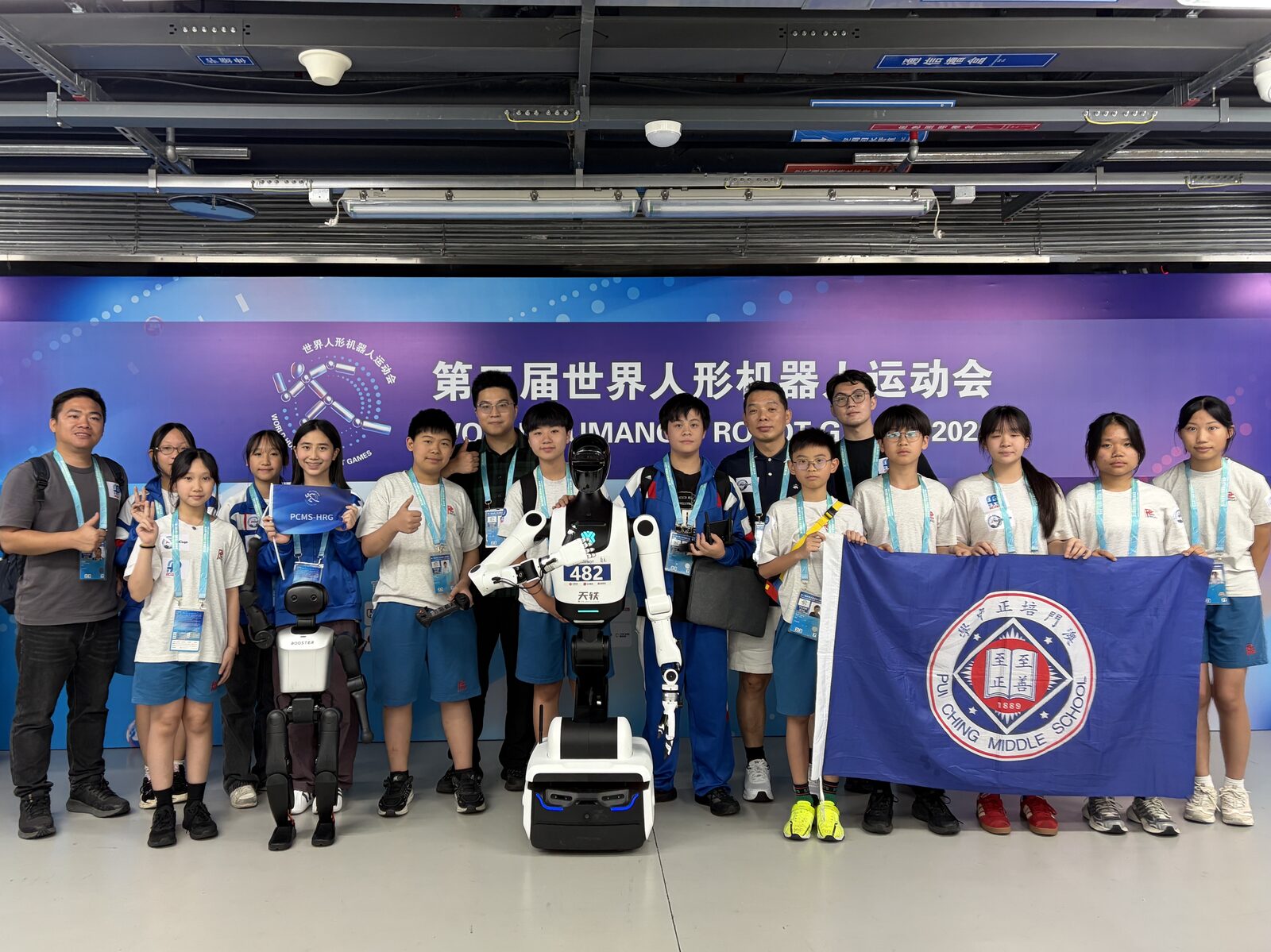
2nd World Humanoid Robot Games — Soccer 3v3 U19
Quarter-finals (Top 8) in Soccer 3v3 U19 — Macau's first team at the World Humanoid Robot Games.
The second World Humanoid Robot Games brought 666 teams and 2,056 robots from 16 countries across six continents to Beijing to compete in 51 events. Pui Ching entered two teams — PCMS-HRG in the Soccer 3v3 U19 competition, and FAMBOT in the Retail Service scenario event — making this Macau's first appearance at the Games.
Soccer 3v3 U19 was new this year and set aside specifically for secondary school students. Robots must move, find the ball, choose between attacking and defending, and coordinate with teammates entirely on their own. PCMS-HRG kept its nerve through the group stage and reached the quarter-finals, adjusting robot settings and match strategy between games against far more experienced opposition.
In the parallel Retail Service scenario event, FAMBOT's robot had to pick products, restock shelves and patrol back to its station in sequence — a test of perception, navigation, grasping, system integration and sustained task execution. Sixty-six teams entered and only the top 16 advanced; competing as school students against corporate and university entries, the team held its own and gained rare experience under pressure. During the Games both teams were interviewed by Beijing Radio and Television Station.
PCMS-HRG entry — Soccer 3v3 U19
Coaches
- Lao Kun Wa劉冠華
- Lam Kin Un林建源
- Lei Mou Hong李武鴻
Students
- Wu Iat Cheng胡溢晴
- Lam Si Ioi林思睿
- Hoi Wai Kio許惠喬
- Yao Yi Chen姚怡辰
- Lei Pui Weng李沛穎
- Lei Ut Ieng李悅瑩
- Mui Lek Hou梅力昊
- Kwan Chi Cheng關芷晴
- Kong Ngai Lam江艾霖
Also representing Pui Ching
- FAMBOTRetail Service scenario
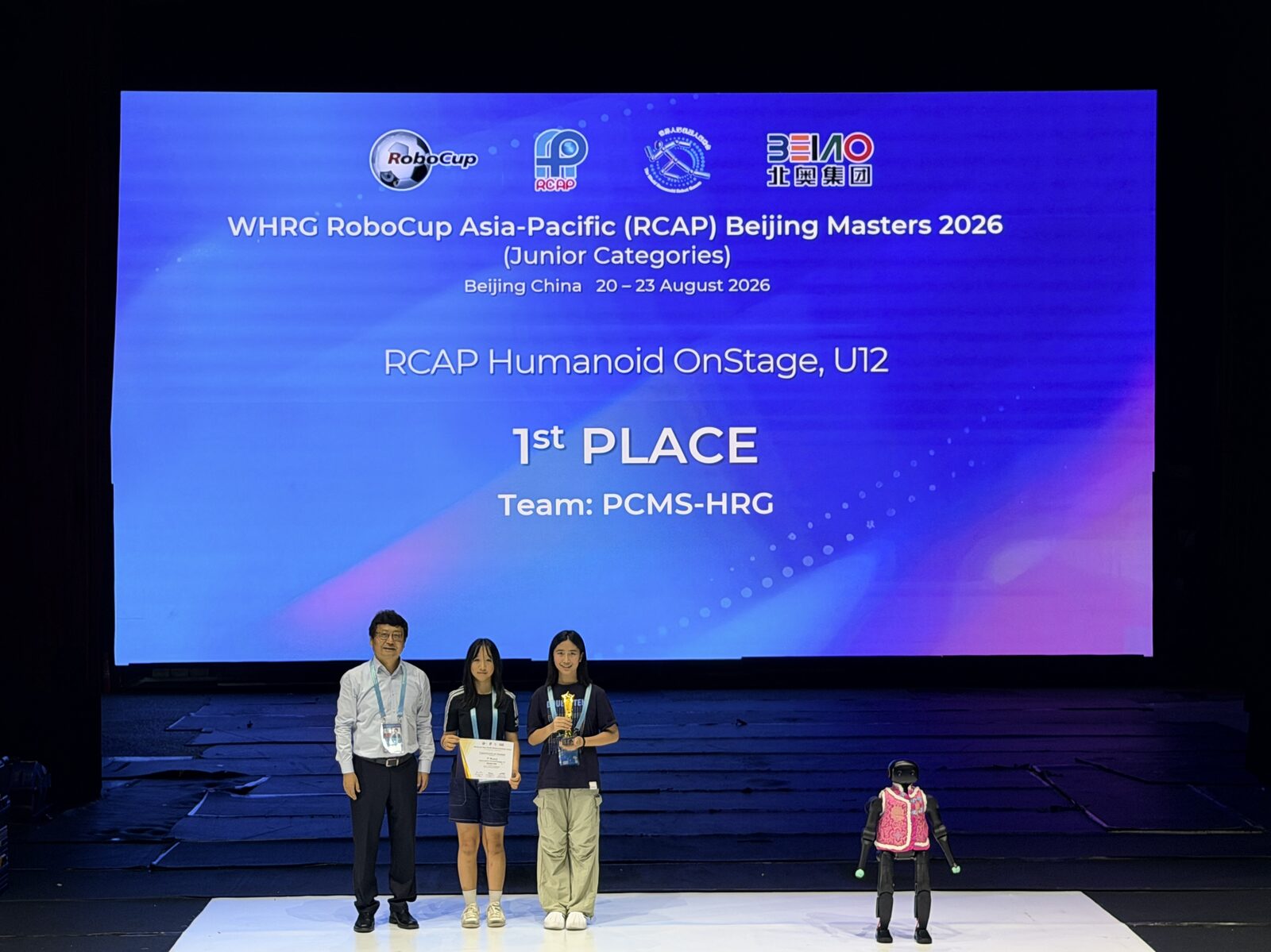
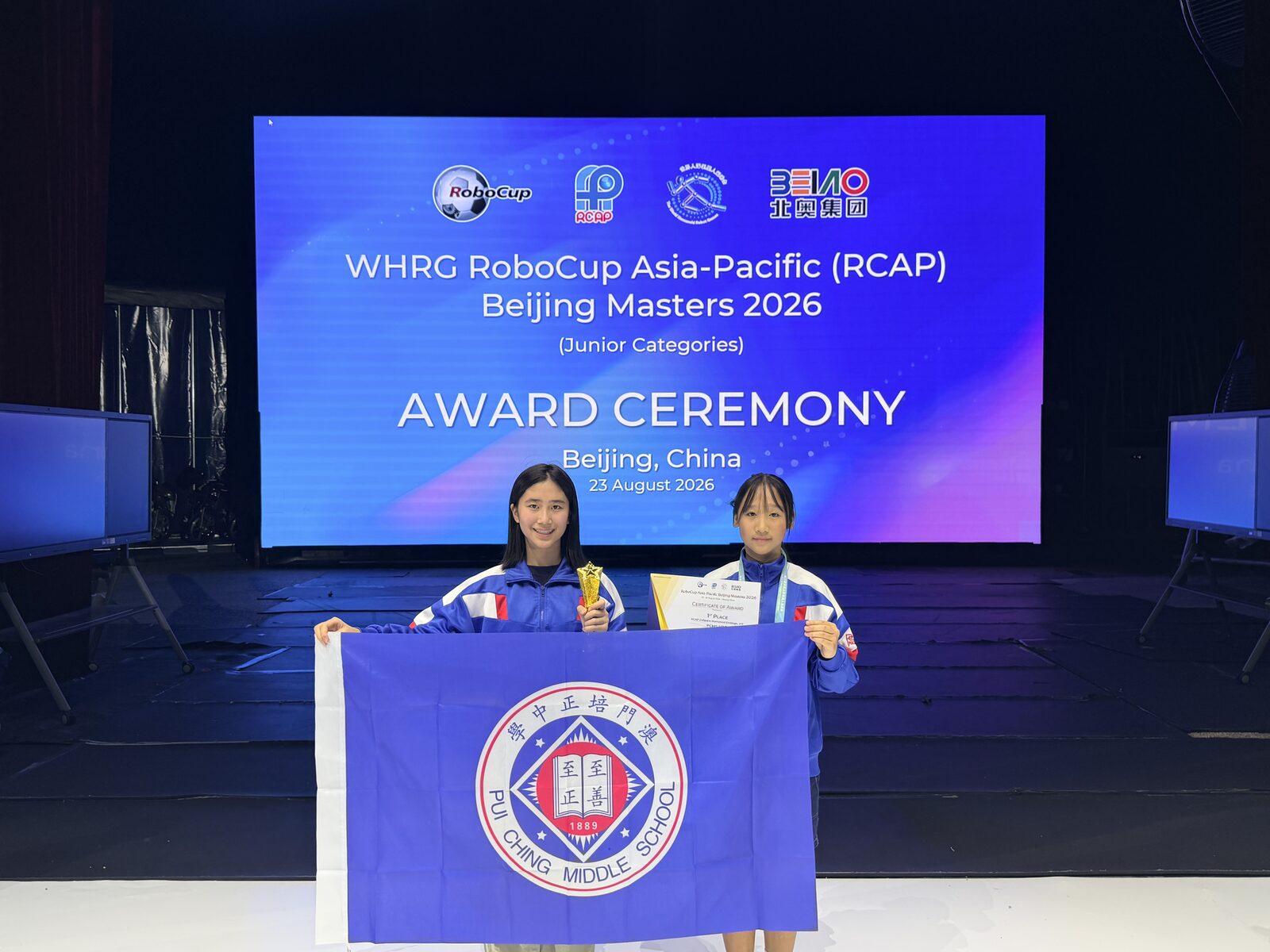
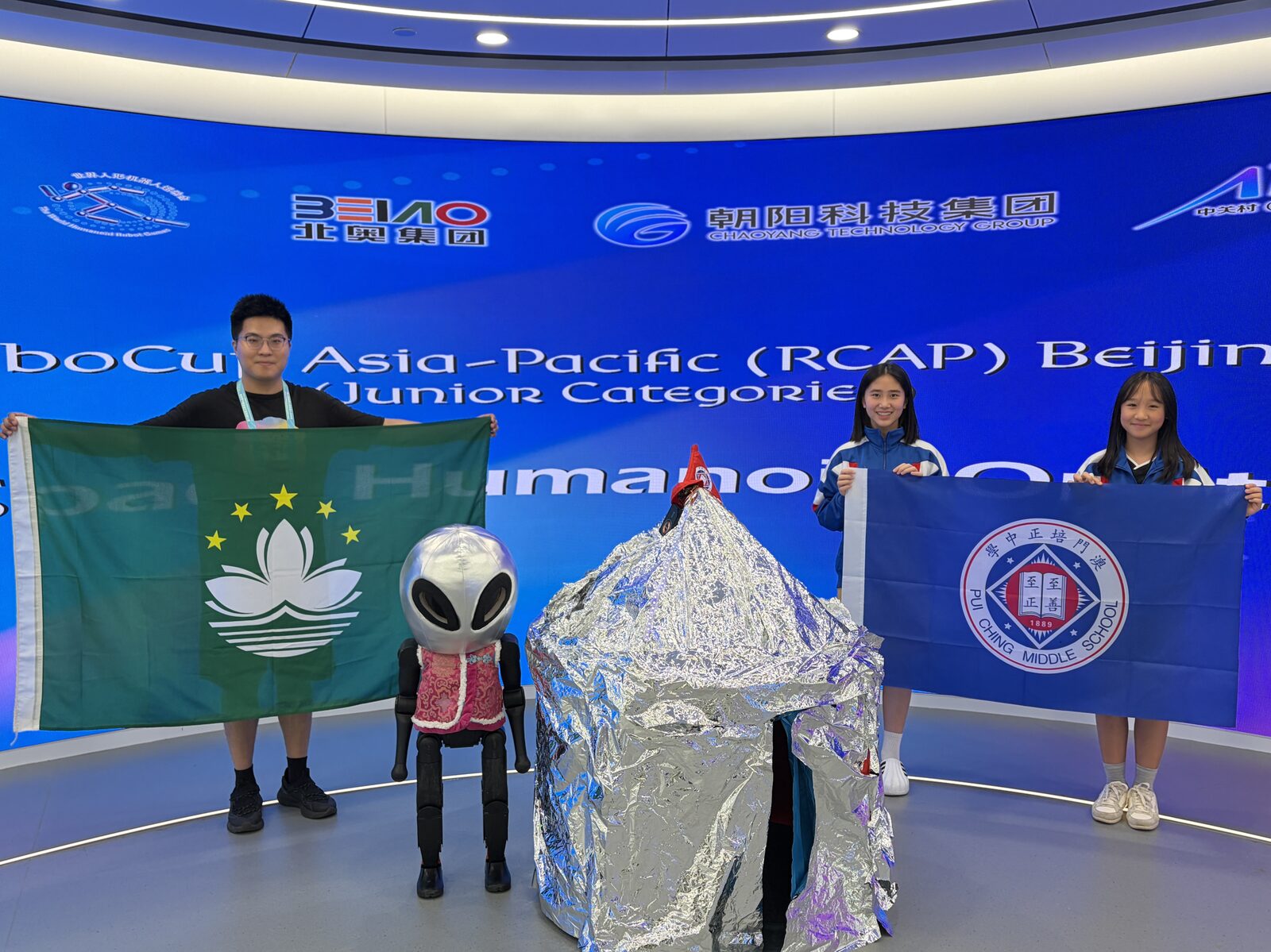
RCAP Asia-Pacific Beijing Masters — Humanoid OnStage U12
1st Place — RCAP CoSpace Humanoid OnStage U12.
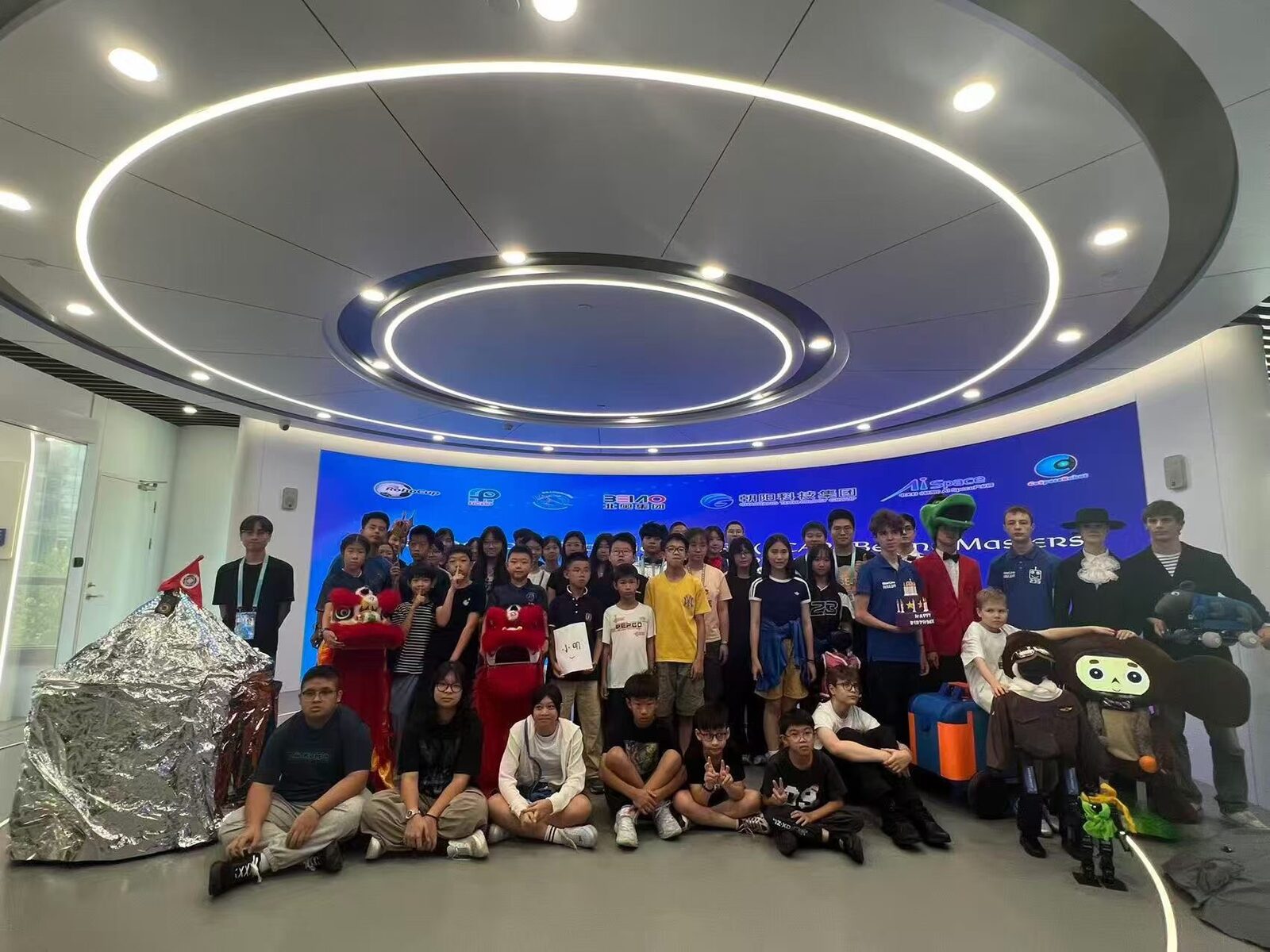
The second RCAP Asia-Pacific Robot World Cup Beijing Masters drew 24 international teams from 16 countries and regions, with competitors from 28 countries and regions in total. Teams from the United States, South Korea and Russia entered for the first time, while Brazil and Australia fielded national squads assembled from several universities and RoboCup teams.
PCMS-HRG entered the RCAP CoSpace Humanoid OnStage U12 event, which judges programming, motion choreography, creative expression and teamwork. Two team members split programming, robot operation, performance design and live presentation between them, testing motions and refining the show repeatedly in the run-up to the competition — and took first place.
Every junior team also had to join the Humanoid OnStage SuperTeam challenge, creating and performing a joint routine with teams from other regions. Working across languages and toolchains under time pressure turned out to be as instructive as the competition itself.
PCMS-HRG entry — CoSpace Humanoid OnStage U12
Coaches
- Lao Kun Wa劉冠華
- Lam Kin Un林建源
- Lei Mou Hong李武鴻
Students
- Kong Ngai Lam江艾霖
- Fong Cheng In馮靖然
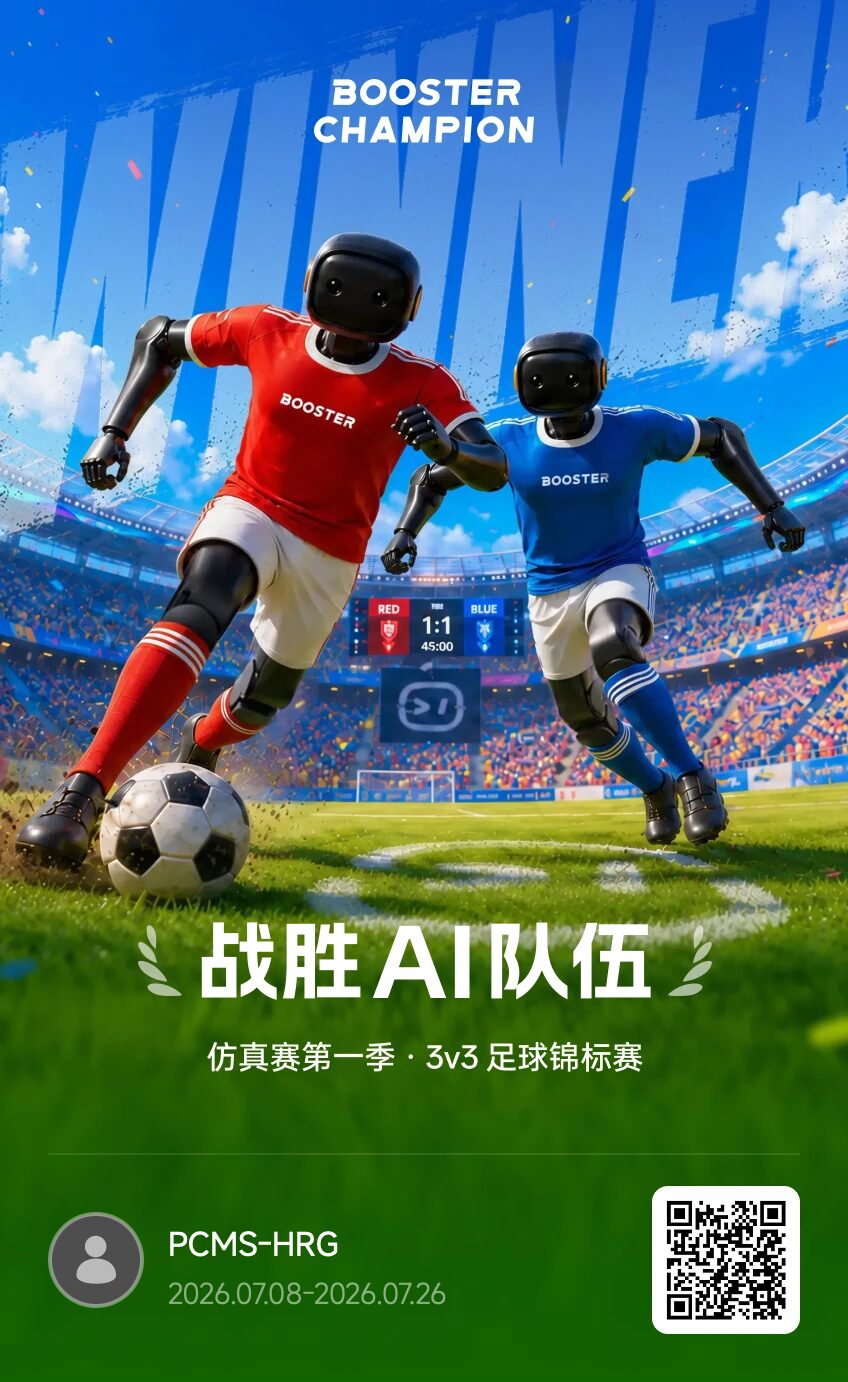
Booster Champion Night Season 1 — 3v3 Simulated Soccer
Cleared the qualifying round — PCMS-HRG beat the AI benchmark team to pass qualification for Season 1 of the 3v3 championship.
Between the RoboCup finals and the summer competitions in Beijing, the team entered Booster Robotics' first Champion Night season — a 3v3 simulated soccer league played entirely in Booster Studio, with code submitted for automated matches.
Simulation strips away hardware failures and battery limits and leaves nothing but strategy: behaviour-tree design, role assignment, positioning and ball pursuit. It is the cheapest place to fail, and the fastest place to iterate, so improvements found here fed straight back into the physical robots' match code.
RoboCup 2026 — Humanoid Soccer League, Incheon
5th in the world — RoboCup Humanoid Soccer League, Large Division (Major bracket).
RoboCup is the largest robotics and AI competition in the world. In 2026 the Humanoid League and the Standard Platform League merged into the new Humanoid Soccer League (HSL), and PCMS-HRG entered its Large Division — the tier for robots up to 190 cm and 80 kg — in the Major bracket, competing against university and research laboratory teams.
The HSL is deliberately unforgiving. Robots must play with a human-like body plan and human-like senses; there are no shortcuts through range sensors or external tracking. Over five intensive days the students handled unfamiliar lighting, hardware faults and mid-match strategy changes on their own.
PCMS-HRG reached the quarter-finals before being eliminated, finishing 5th in the world in its first appearance at this level.
PCMS-HRG entry — Humanoid Soccer League, Large Division
Coaches
- Lao Kun Wa劉冠華
- Lam Kin Un林建源
- Lei Mou Hong李武鴻
Students
- Wu Iat Cheng胡溢晴
- Lam Si Ioi林思睿
- Hoi Wai Kio許惠喬
- Yao Yi Chen姚怡辰
- Lei Pui Weng李沛穎
- Lei Ut Ieng李悅瑩
- Mui Lek Hou梅力昊
- Kwan Chi Cheng關芷晴
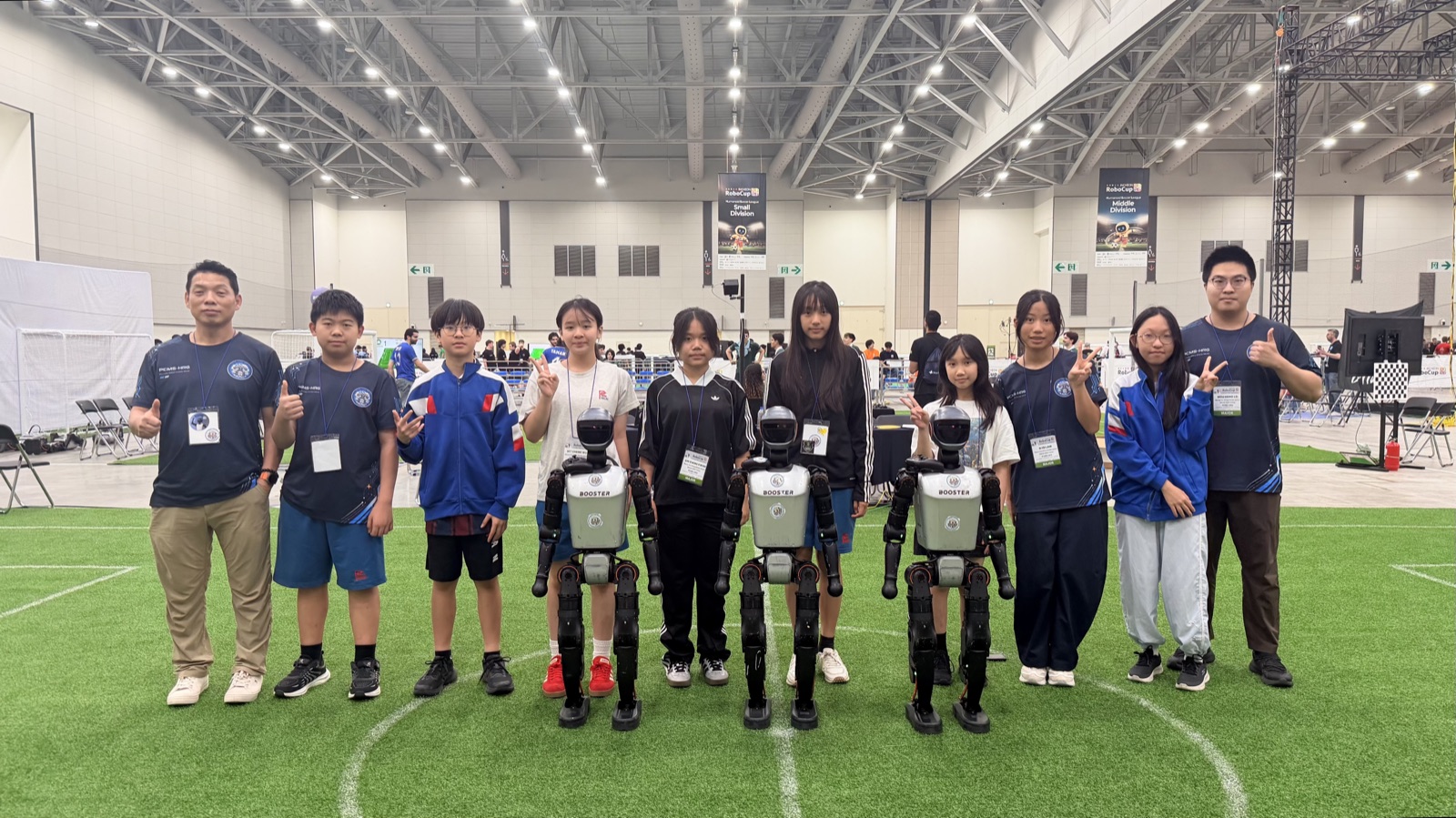
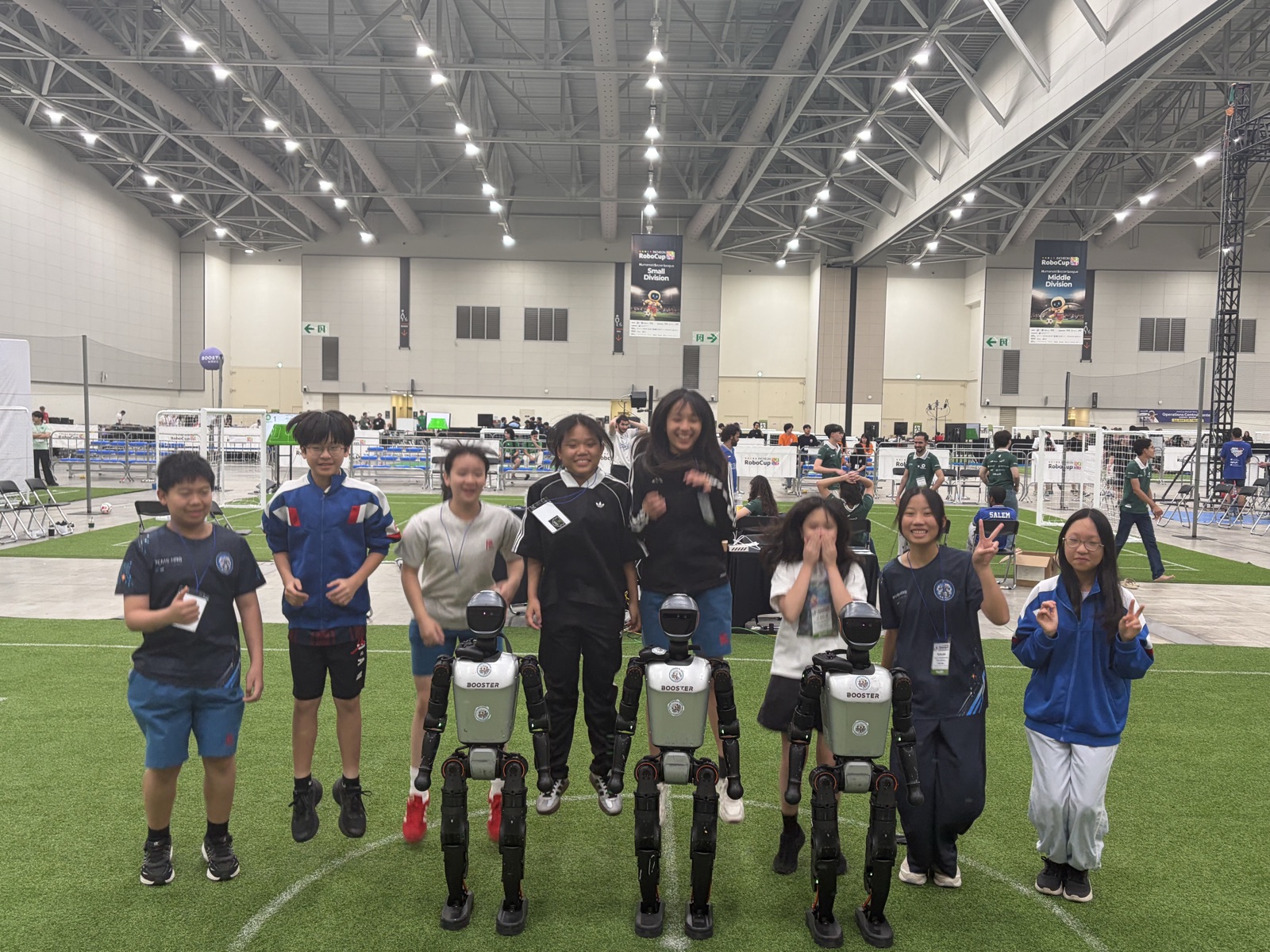
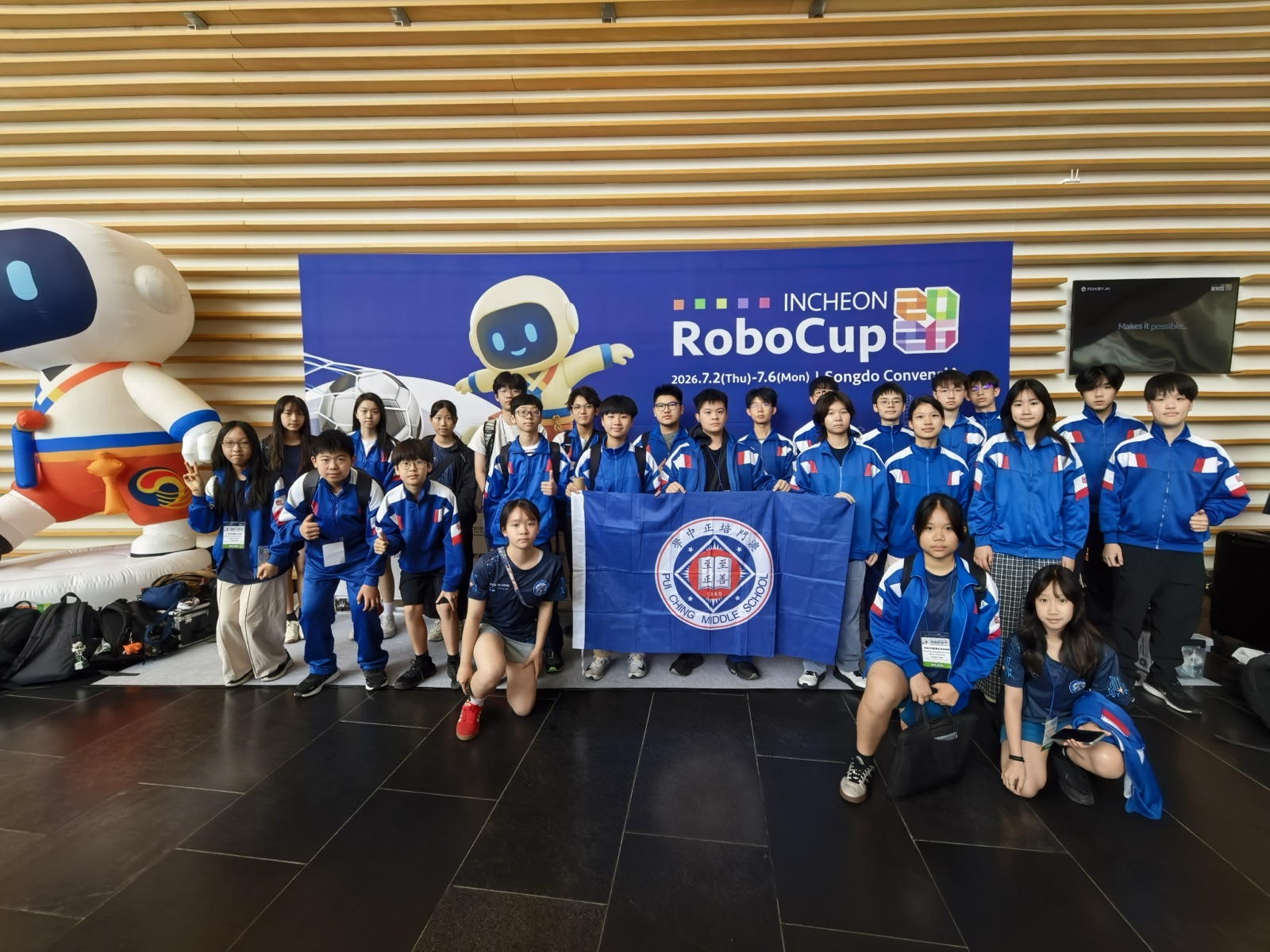
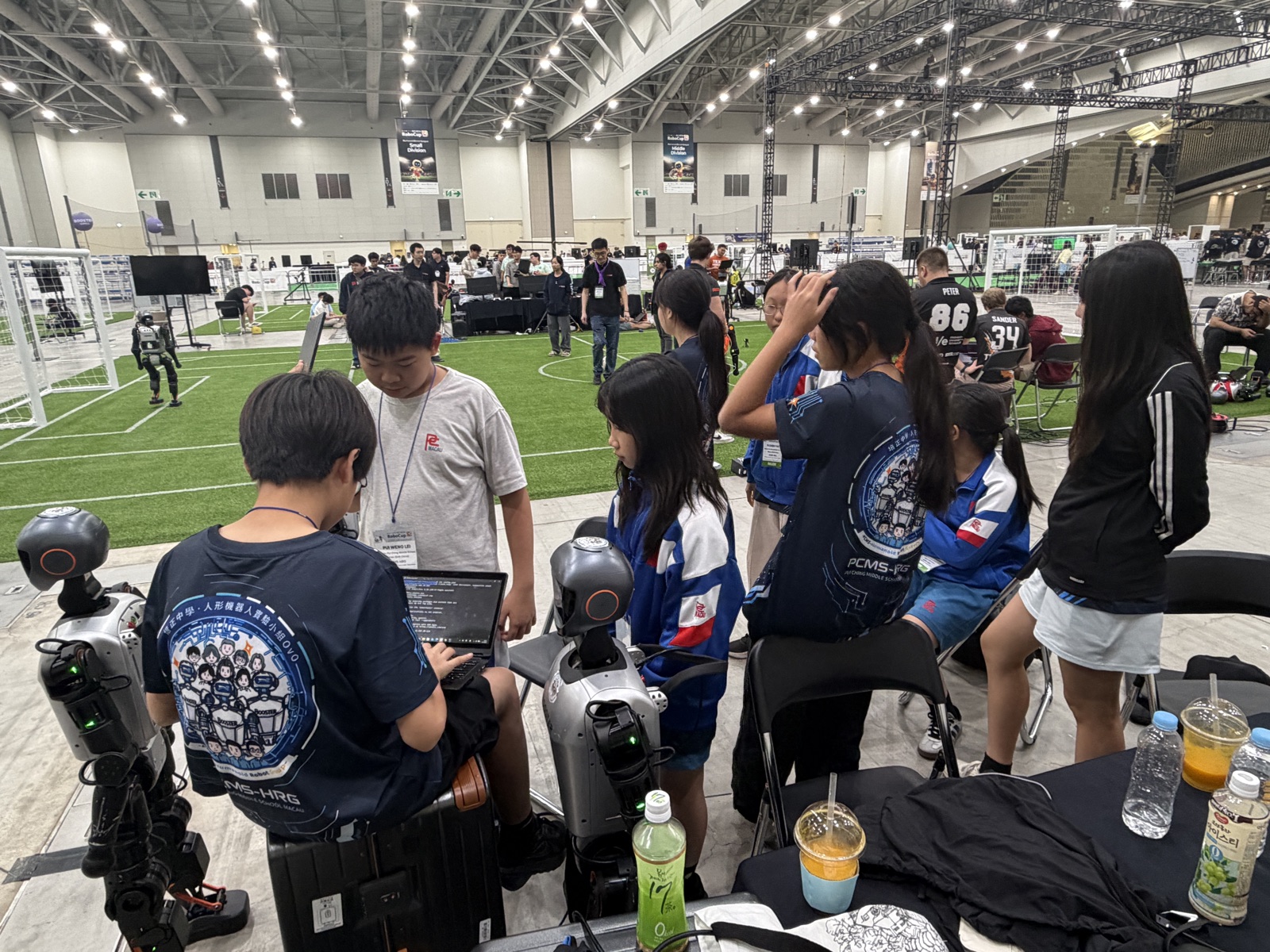
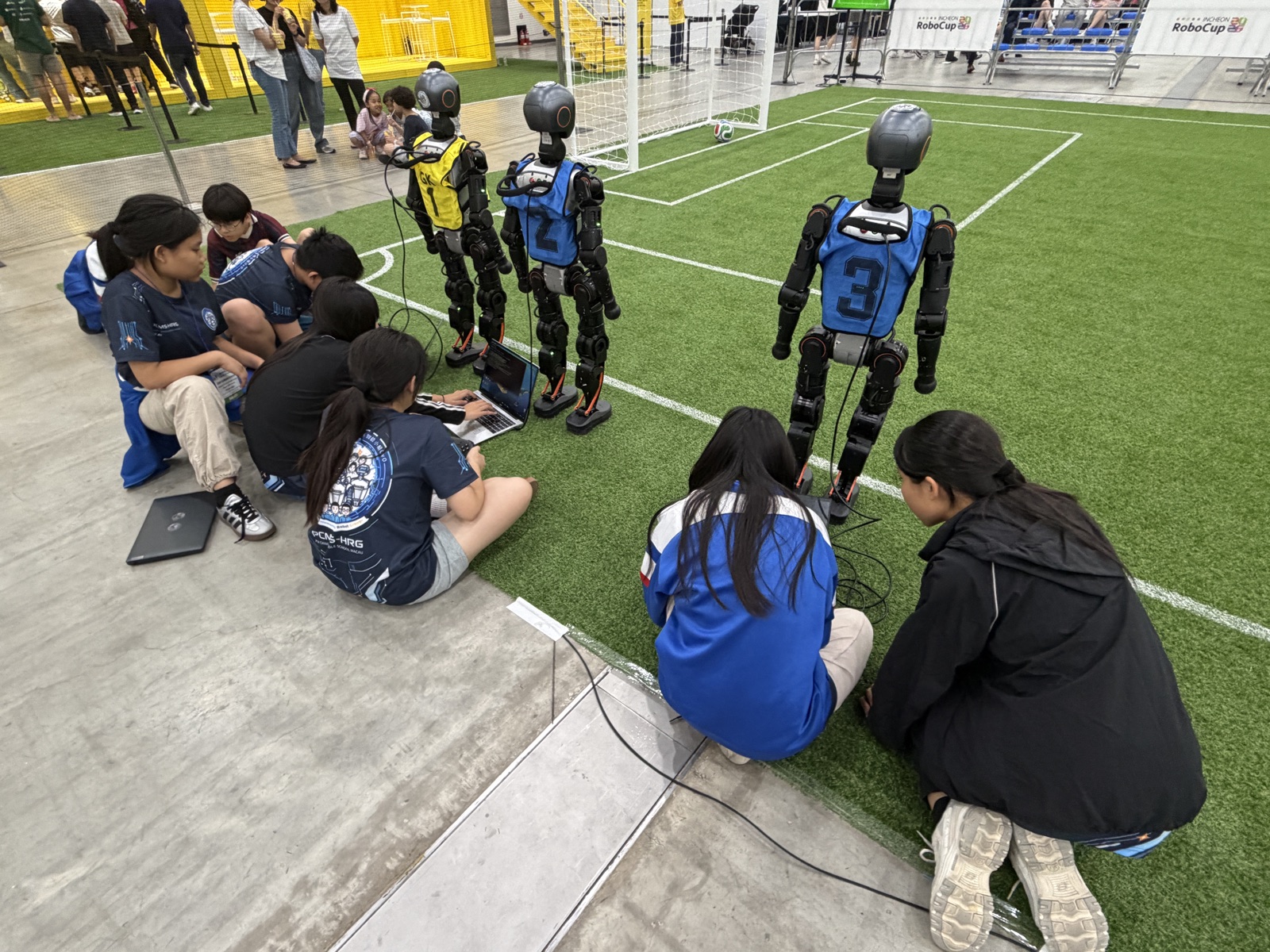
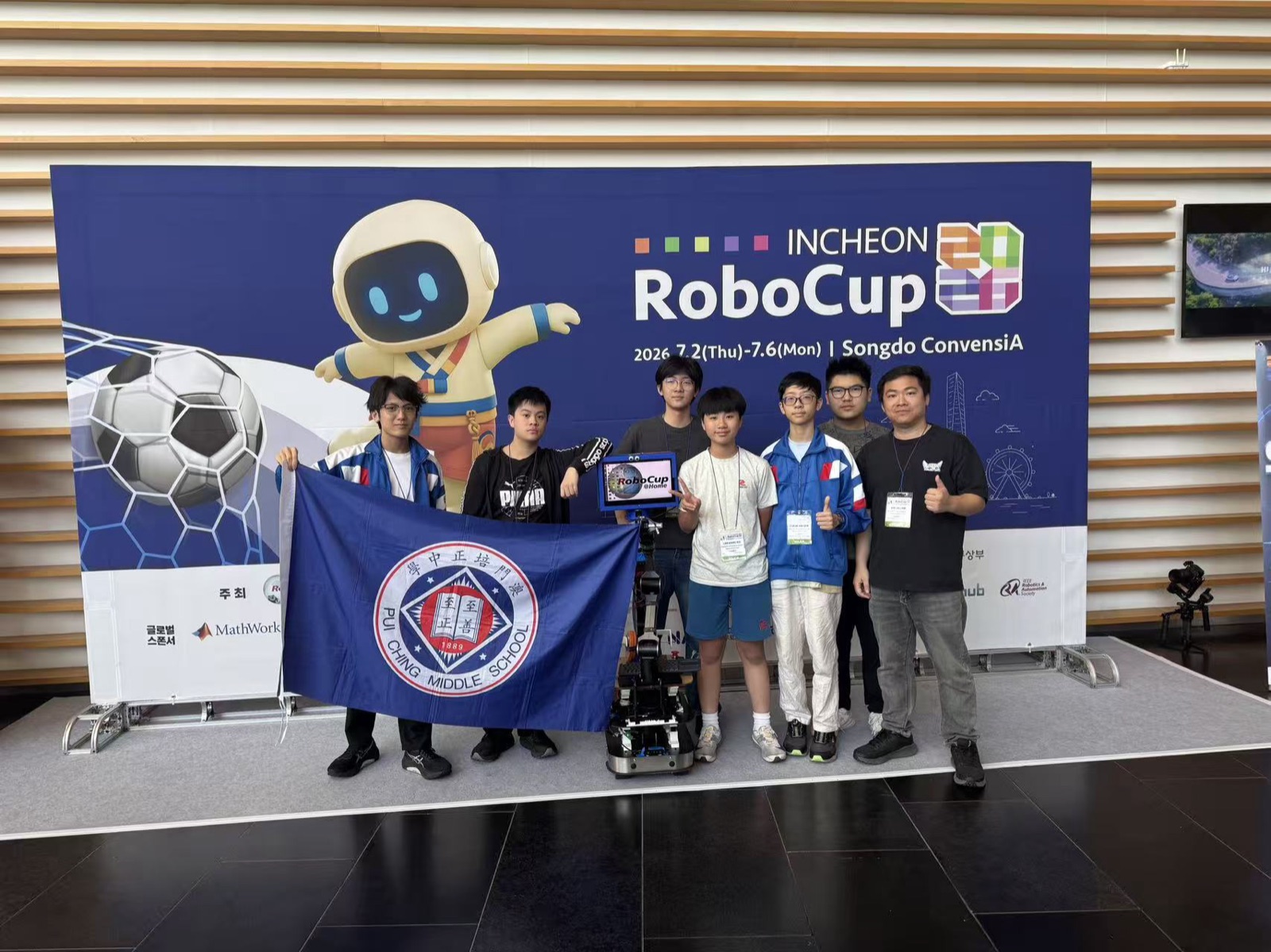
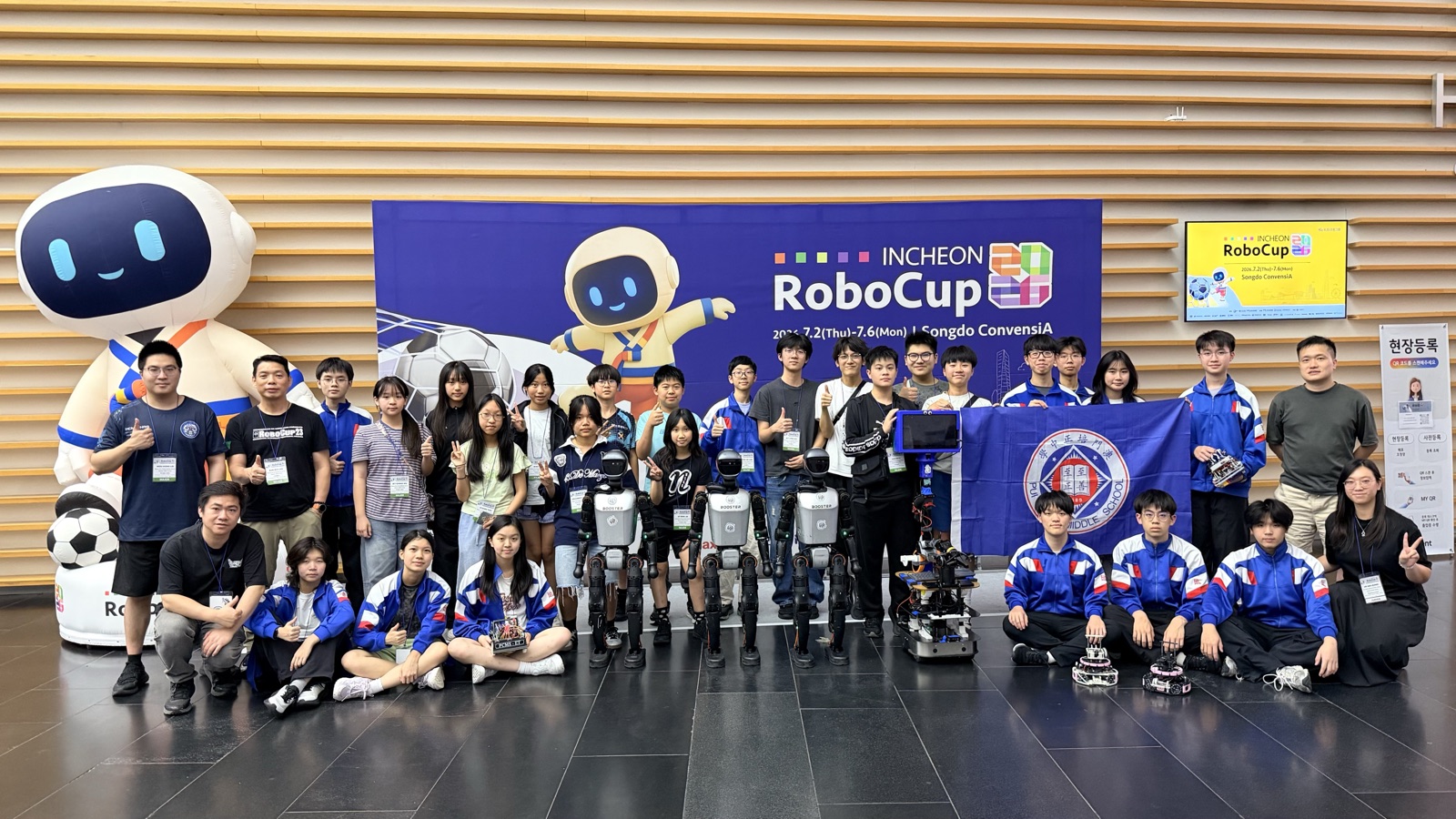
Pui Ching Results at RoboCup 2026
The humanoid team travelled as part of a wider school delegation. Across five days of competition, Pui Ching students placed in every event they entered.
| Event | Division | Result |
|---|---|---|
| Humanoid Soccer League (HSL) | Major — Large Division | 5th in the world |
| Junior Soccer SuperTeam Infrared | Junior | 1st in the world |
| Junior Soccer Infrared | Junior | 2nd in the world |
| Junior Rescue Maze | Junior | 7th in the world — Outstanding Engineering Process award |
| Junior Rescue Line | Junior | 8th in the world |
| RoboCup@Home | Major | 14th in the world — only secondary school team to pass qualification |
Qualification Video
The submission that earned PCMS-HRG its place in the Humanoid Soccer League.
PCMS-HRG RoboCup 2026 qualification submission
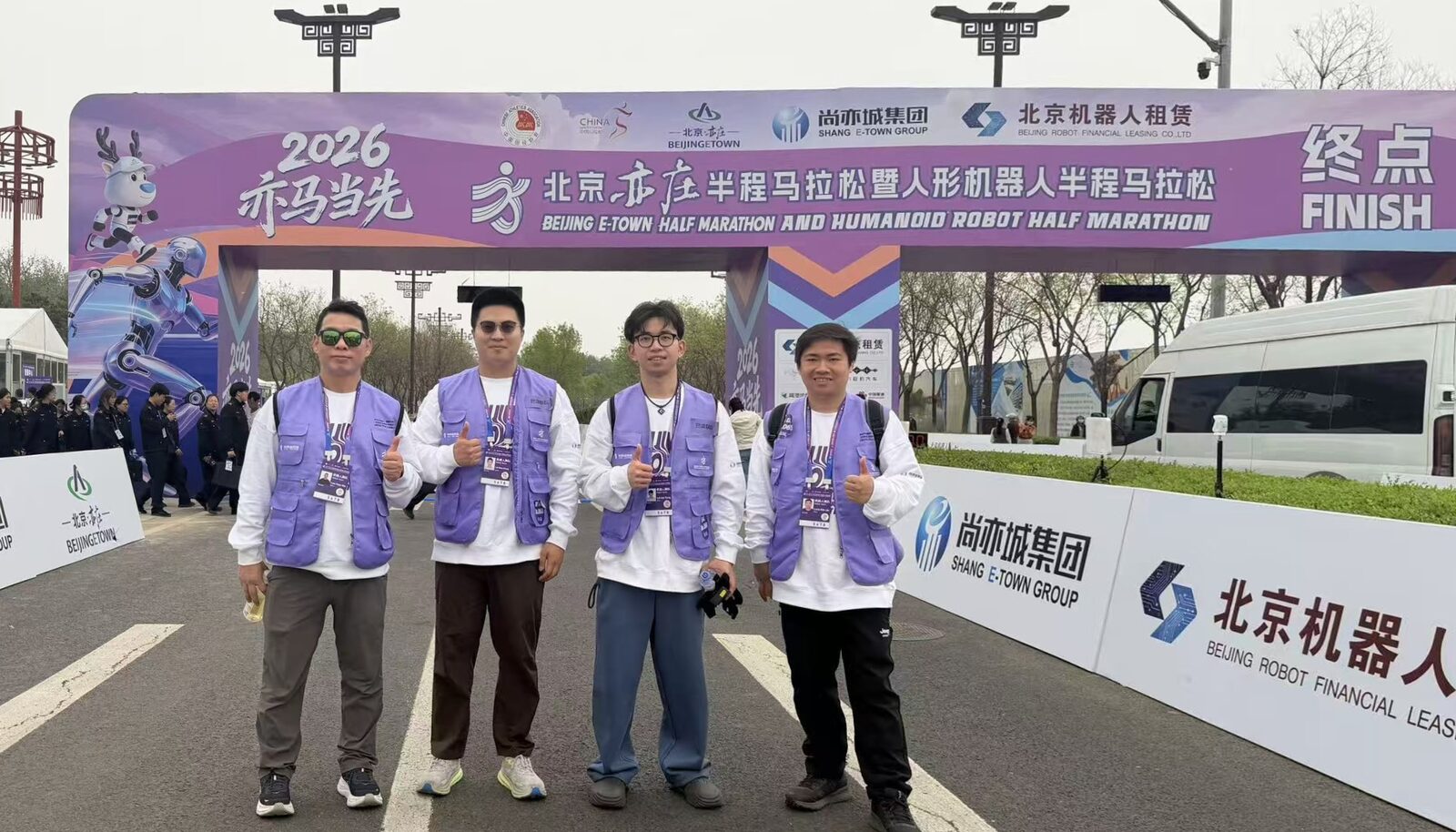
Beijing Yizhuang Humanoid Robot Half Marathon
The 2026 Beijing Yizhuang Half Marathon and Humanoid Robot Half Marathon put robots and human runners on the same 21.0975 km course — over a hundred teams, 105 humanoid robots, five international entries and some 12,000 human runners. Organisers announced they would submit the event for a Guinness World Record for the most autonomous humanoid robots in a half marathon.
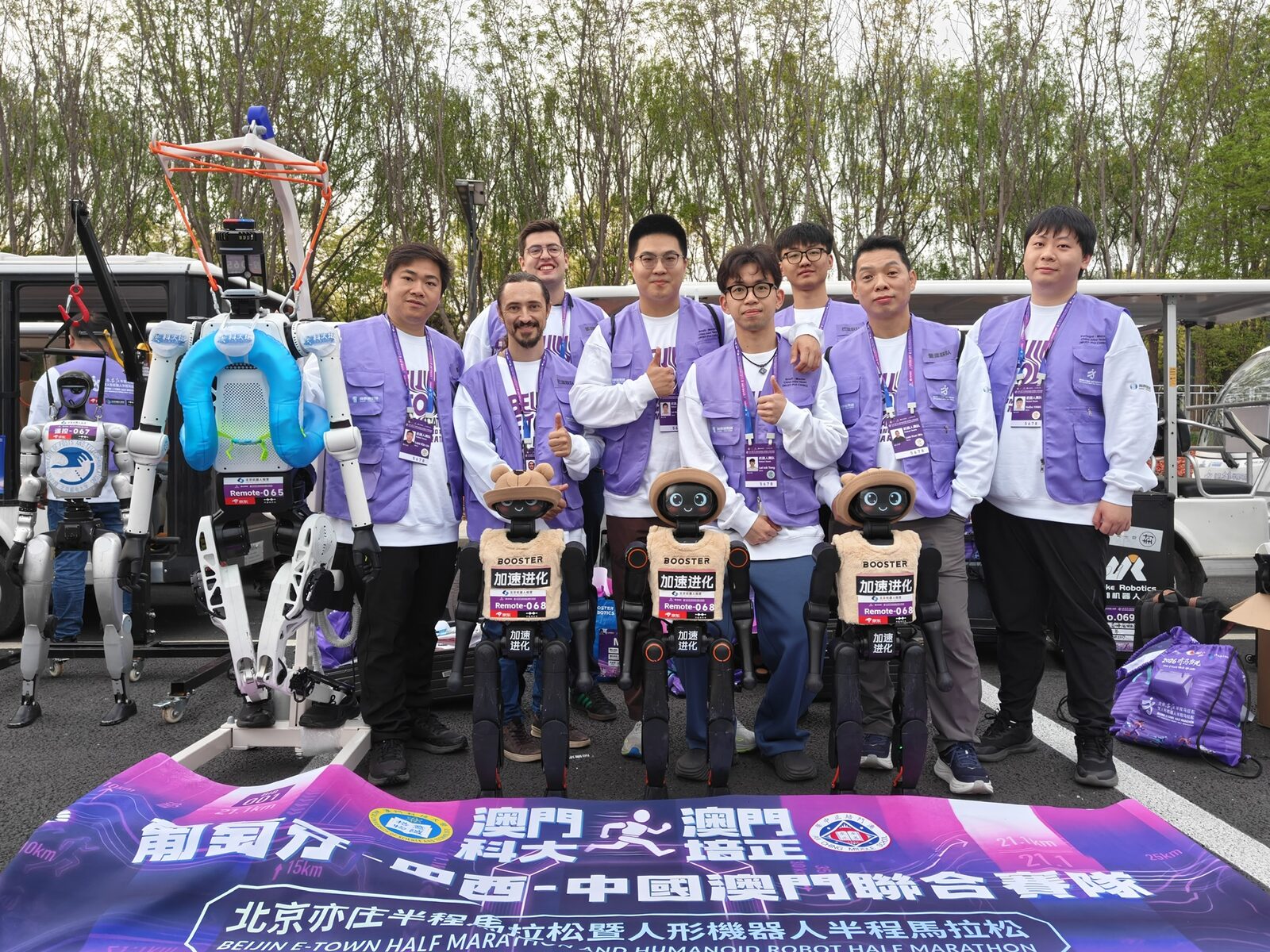
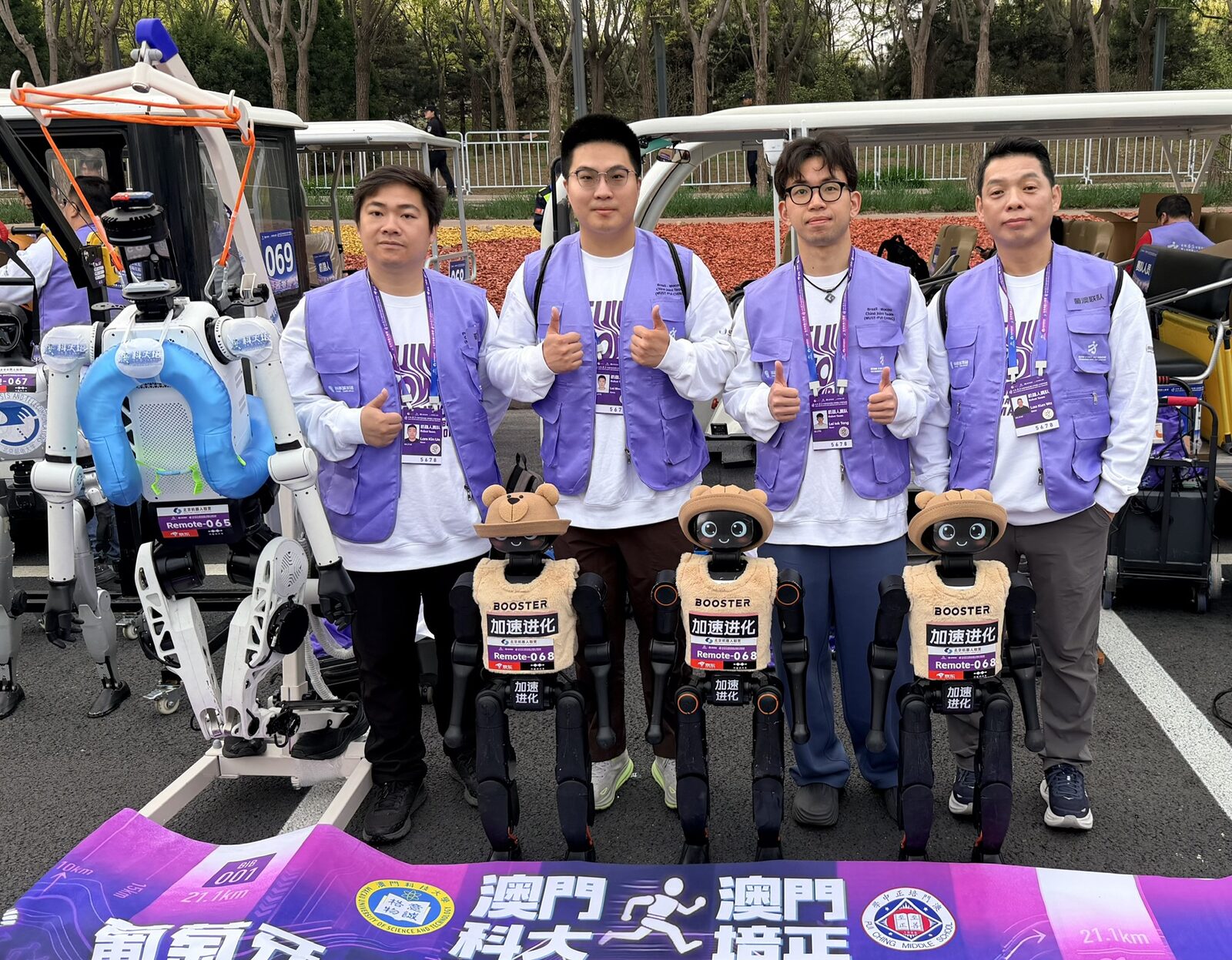
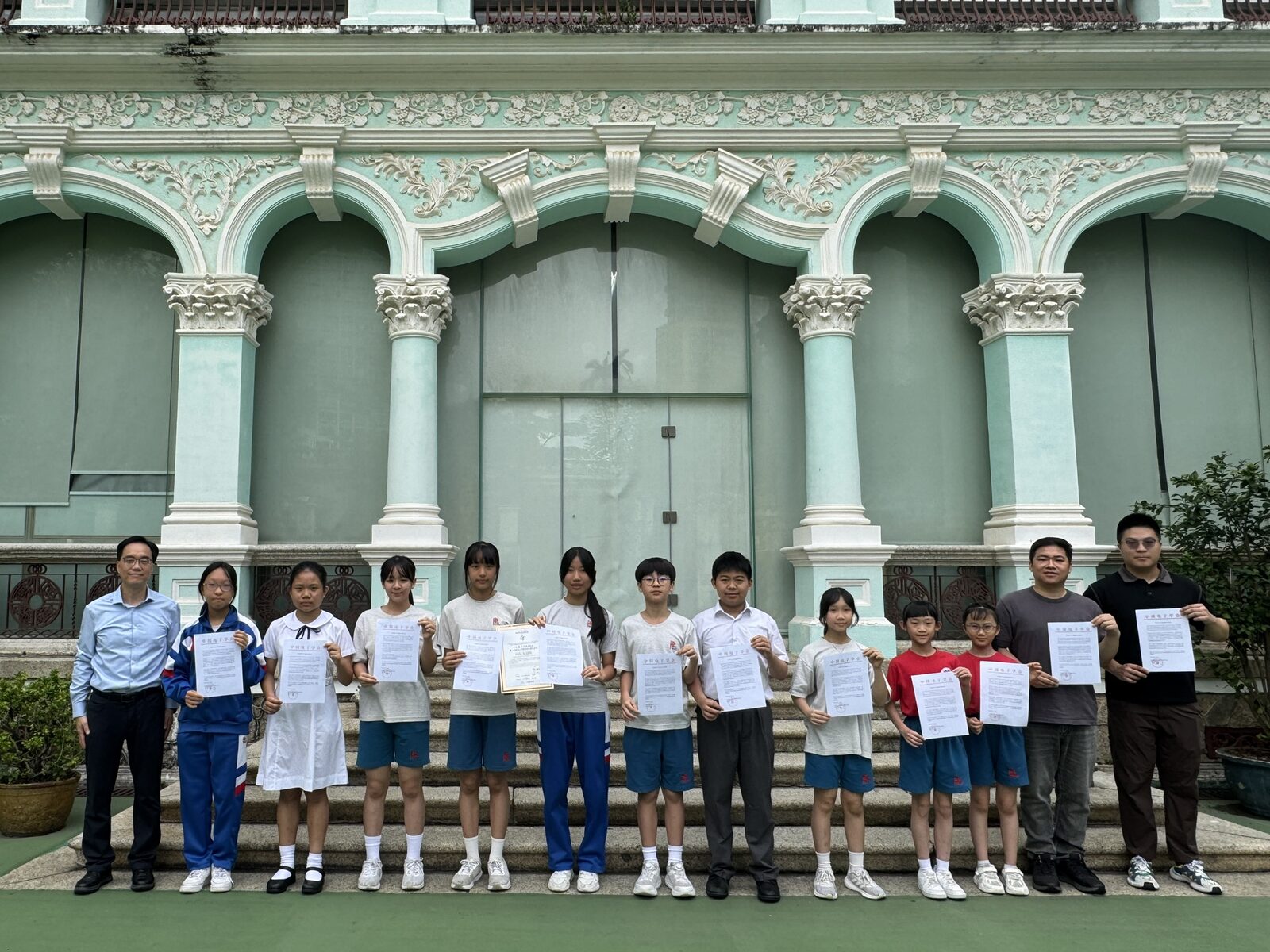
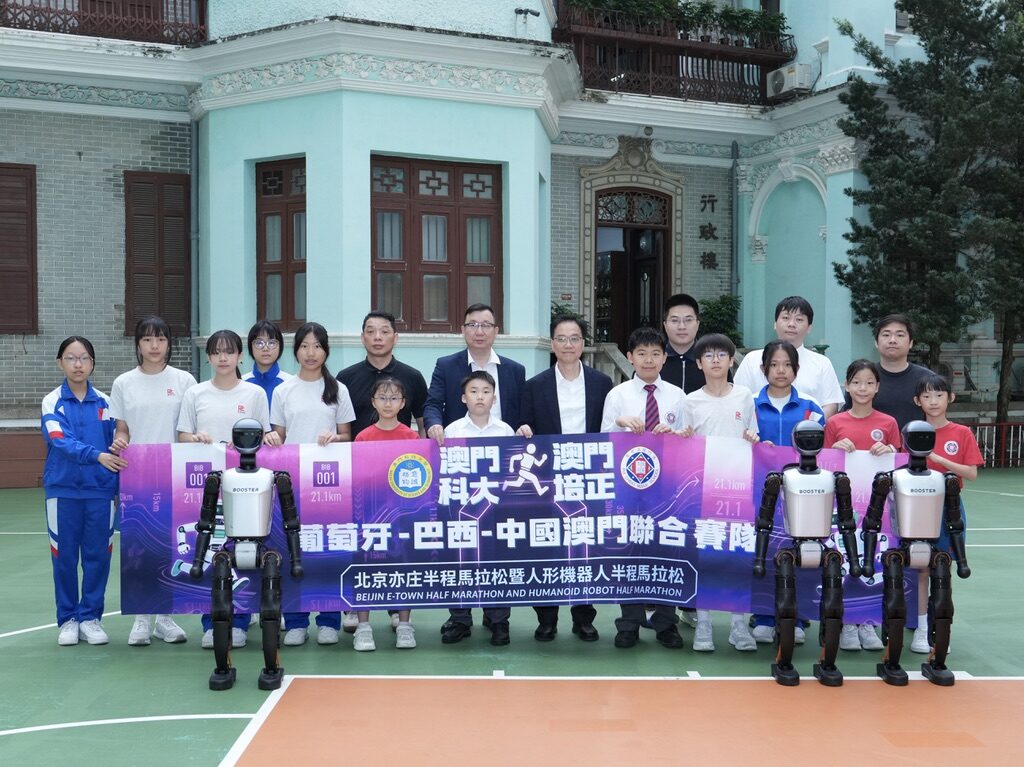
Pui Ching was the only secondary school in the world to take part, entering through two joint teams built with Macau University of Science and Technology and international partners:
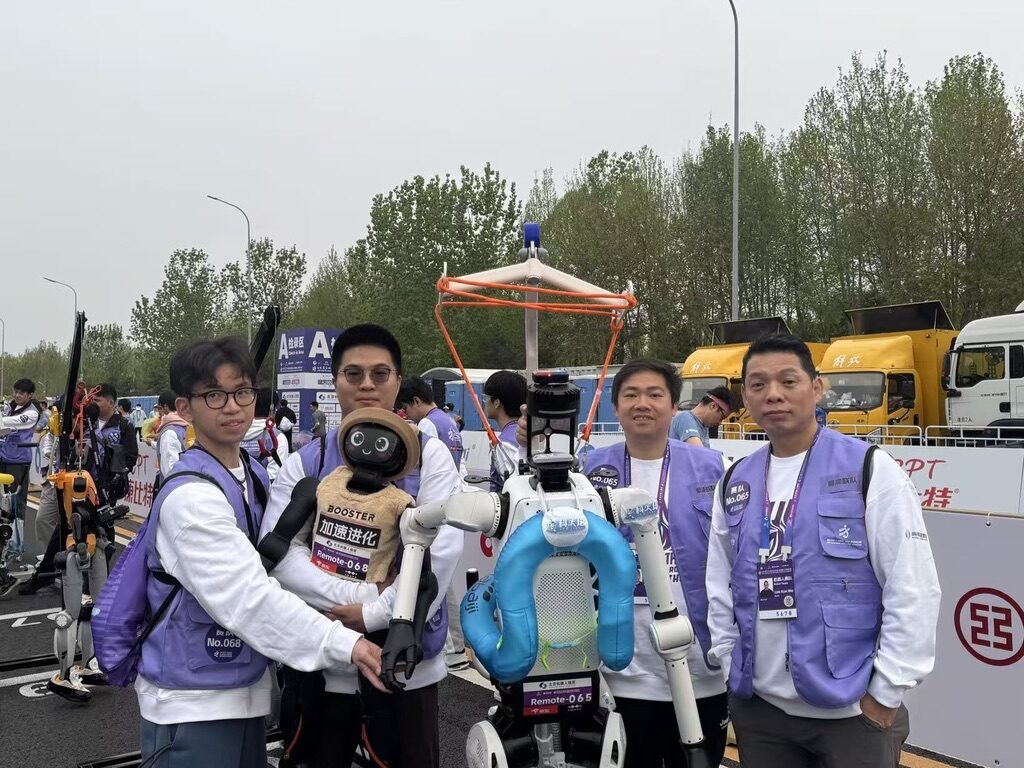
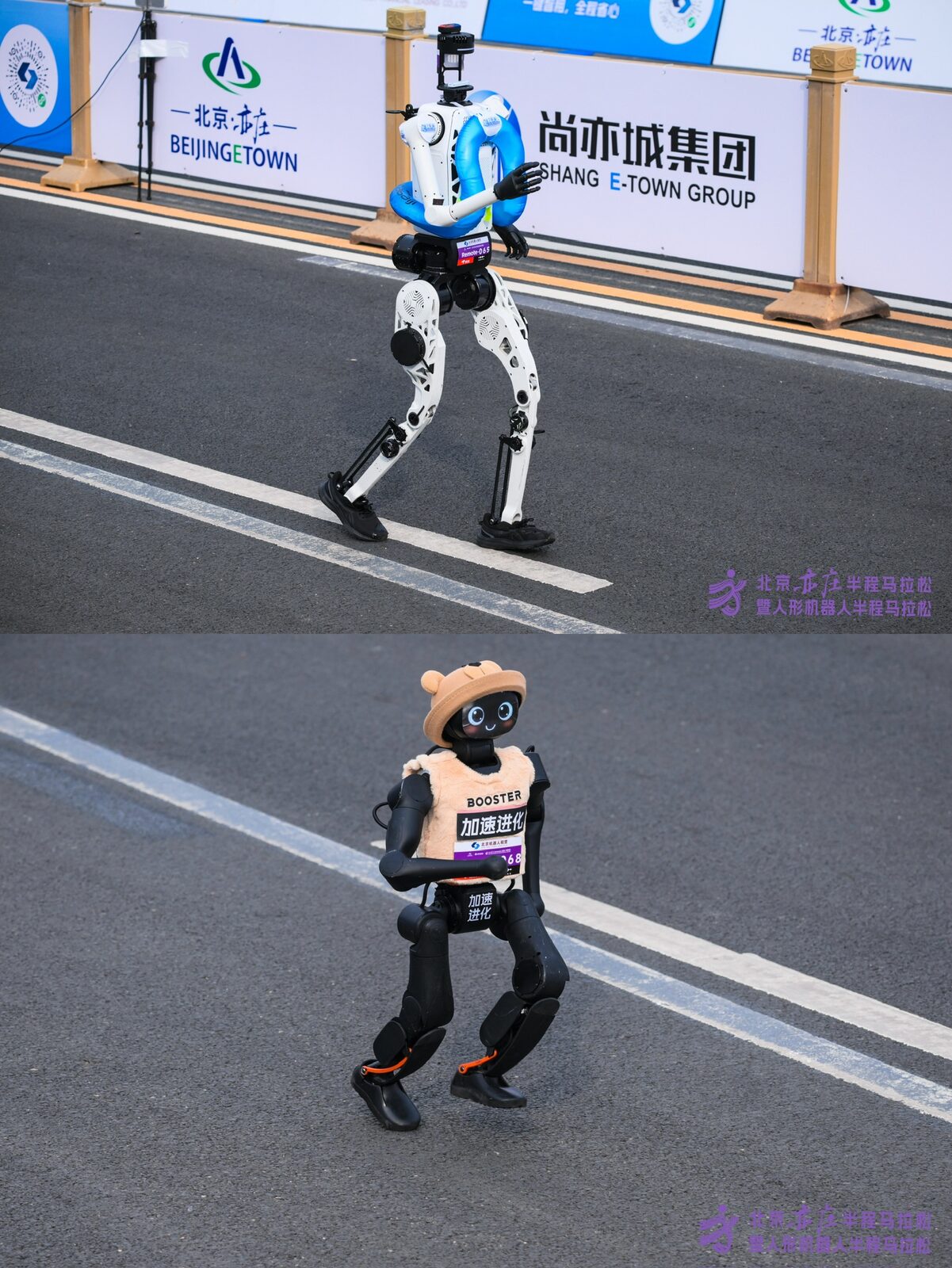
- Portugal–Macau joint team (No. 065), with Instituto Superior Técnico, Lisbon — running the Tien Kung Ultra-2026 humanoid (approx. 175 cm, 75 kg), tuned for gait stability, pace control and wet or sloped road surfaces.
- Brazil–Macau joint team (No. 068), with Brazilian education and research partners — running the Booster K1 (0.95 m, 19.5 kg), with upgraded real-time gait planning and adaptive compliance control to hold posture as joints heat up over distance.
Thirteen students from Primary 3 through Senior 1 supported the entry, handling event documentation, technical study and team preparation. An open road over 21 km is a far harsher test than any lab: battery endurance, thermal management, terrain adaptation and fall recovery all had to work at once, for hours.
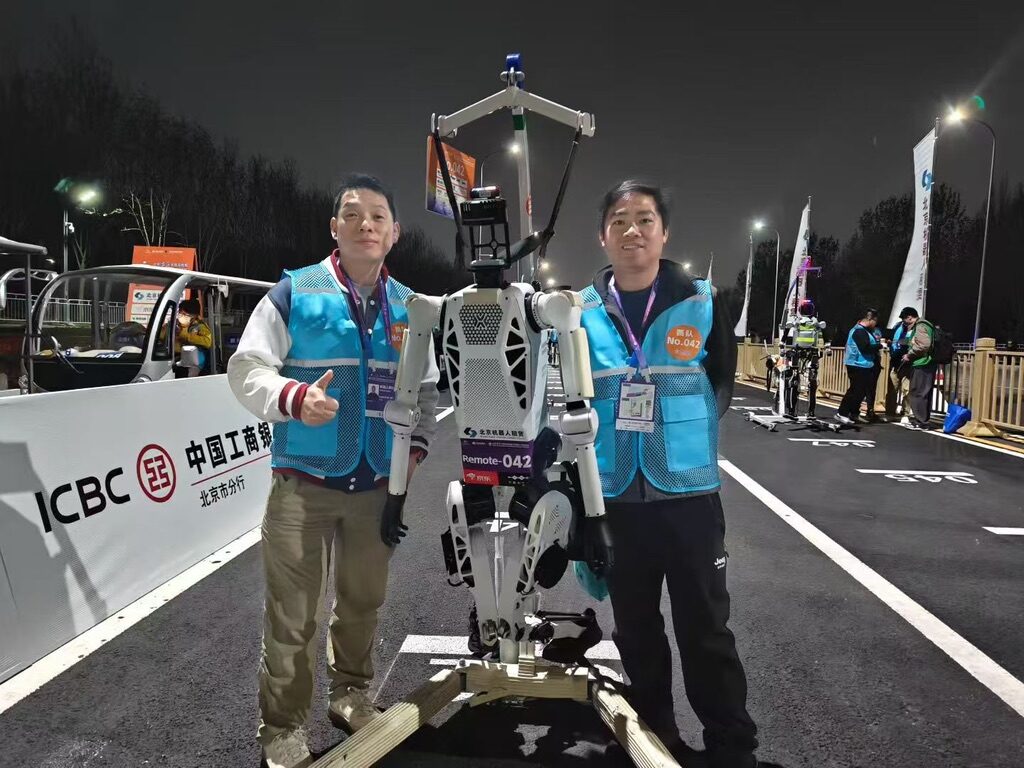
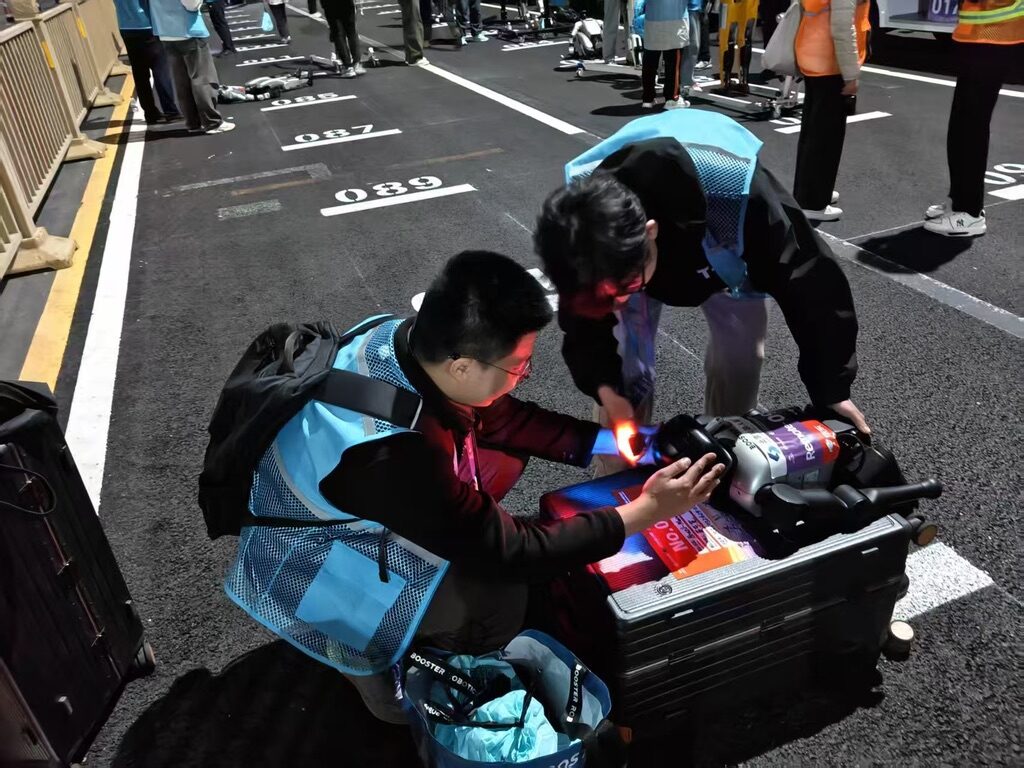
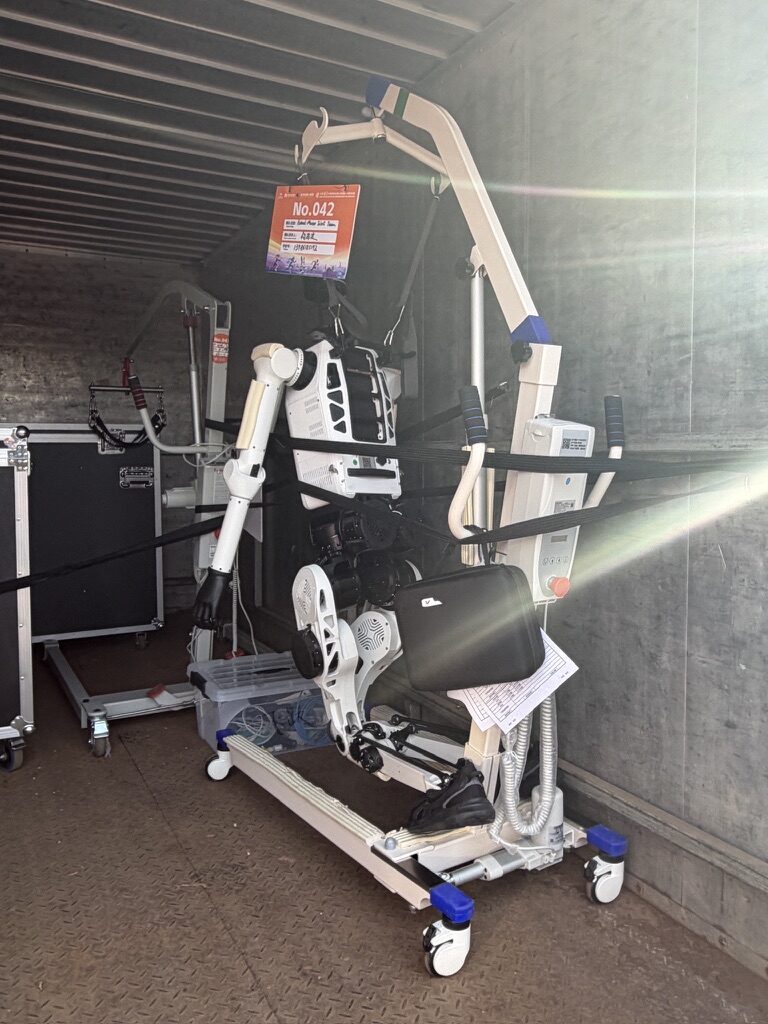
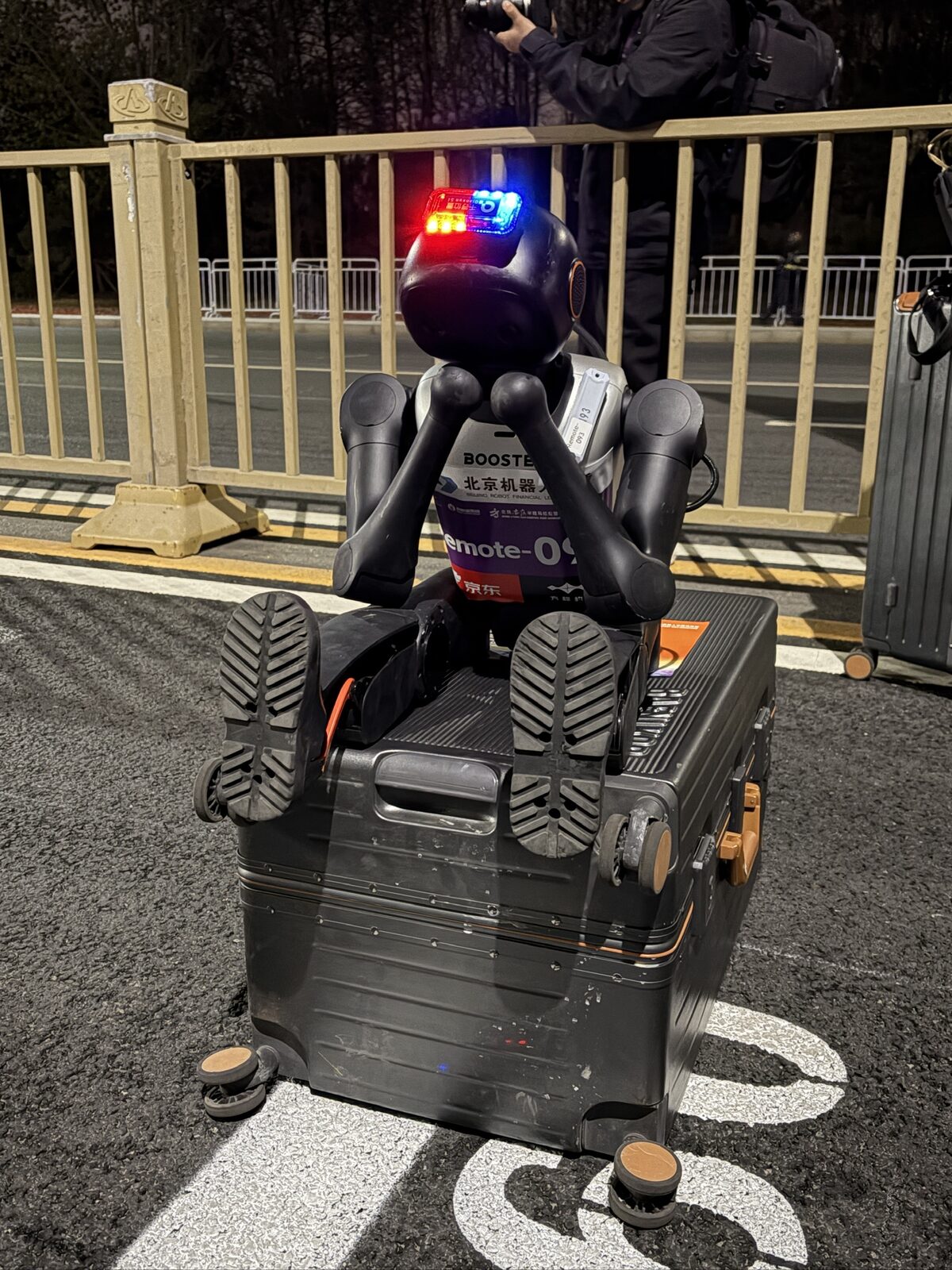
Humanoid Half Marathon — Full-Process Night Test
A week before the race, both joint teams gathered in Yizhuang for the official full-process, full-element test — run overnight from the evening of 11 April into the early hours of 12 April, to competition standard. Course transit, scheduling, equipment coordination and emergency response were all rehearsed exactly as they would run on race day.
More than seventy teams attended, including several international entries. For the students, watching a robot cover real distance on real asphalt at night made the gap between laboratory testing and open-road operation immediate and concrete.
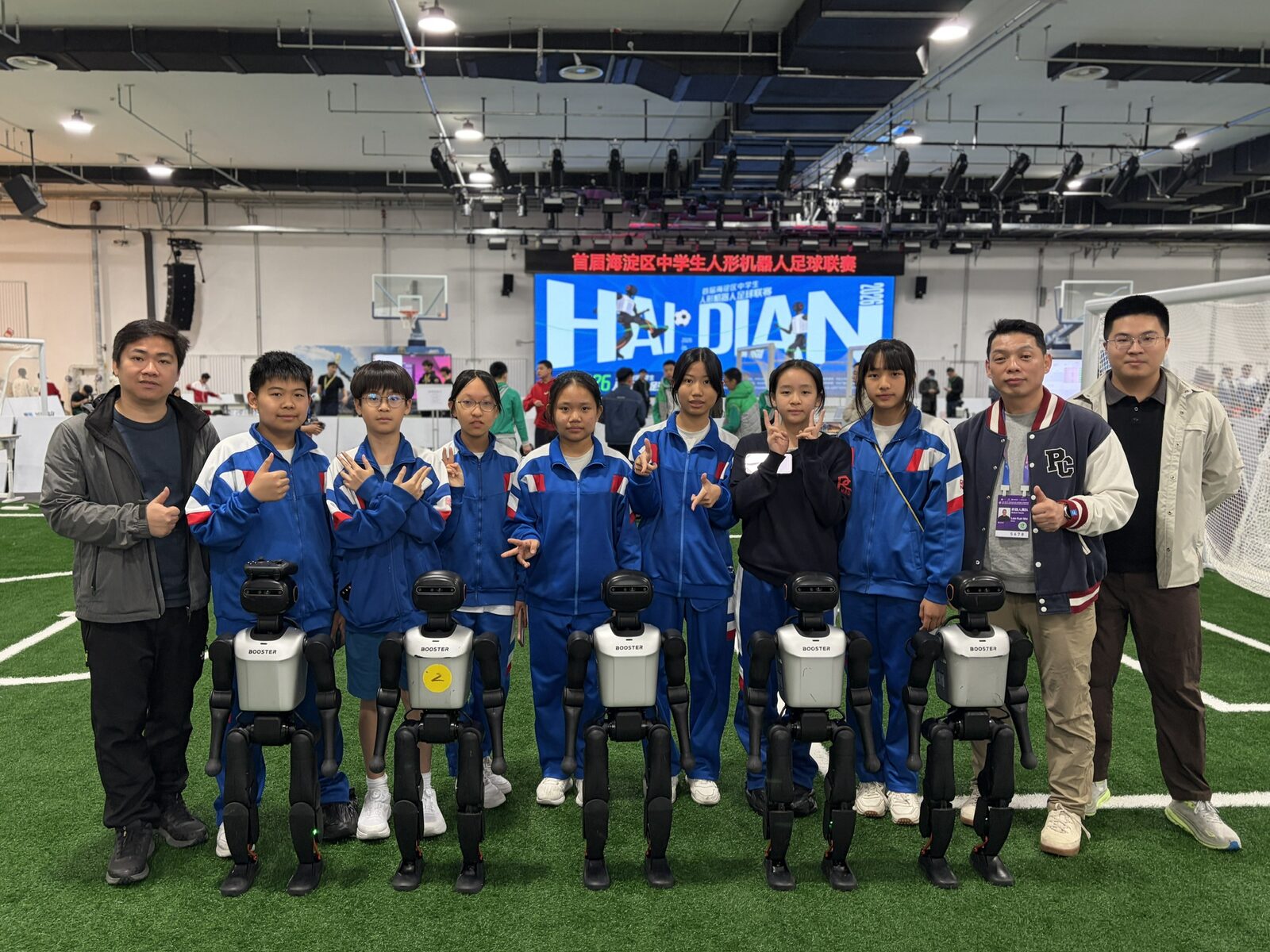
1st Beijing Middle School Humanoid Robot Soccer League
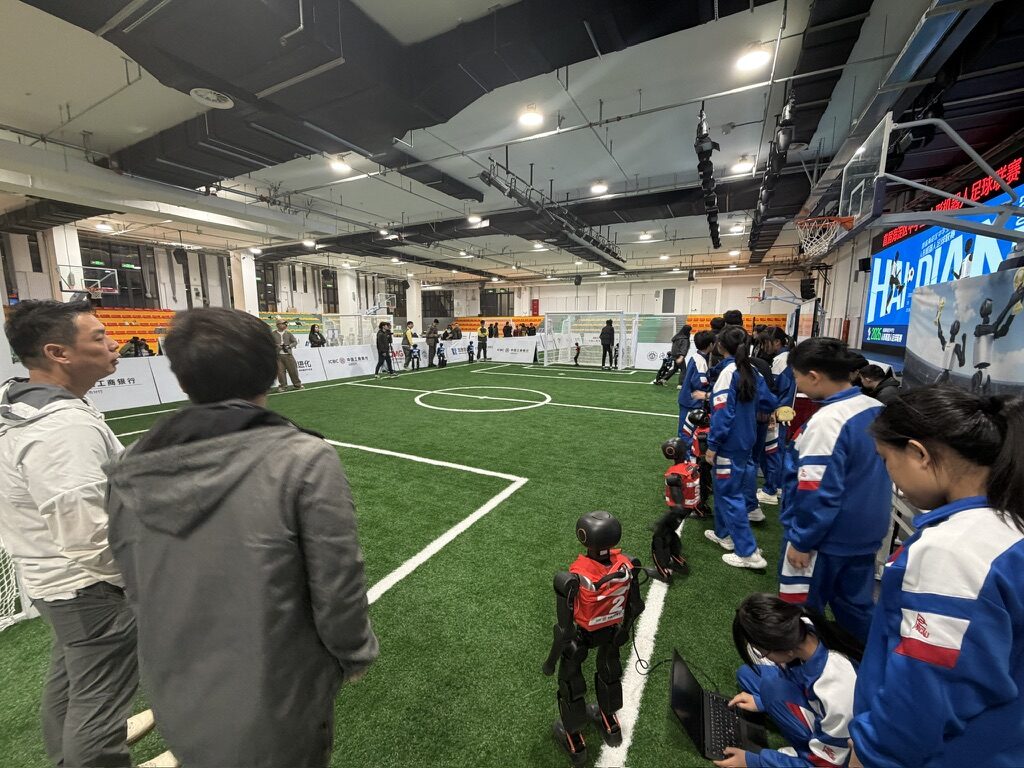
The first Beijing (Haidian) Middle School Humanoid Robot Soccer League was an embodied-AI proving ground built specifically for secondary school students. No remote control and no outside intervention are permitted — results come purely from student-written code and how the robots behave on the day.
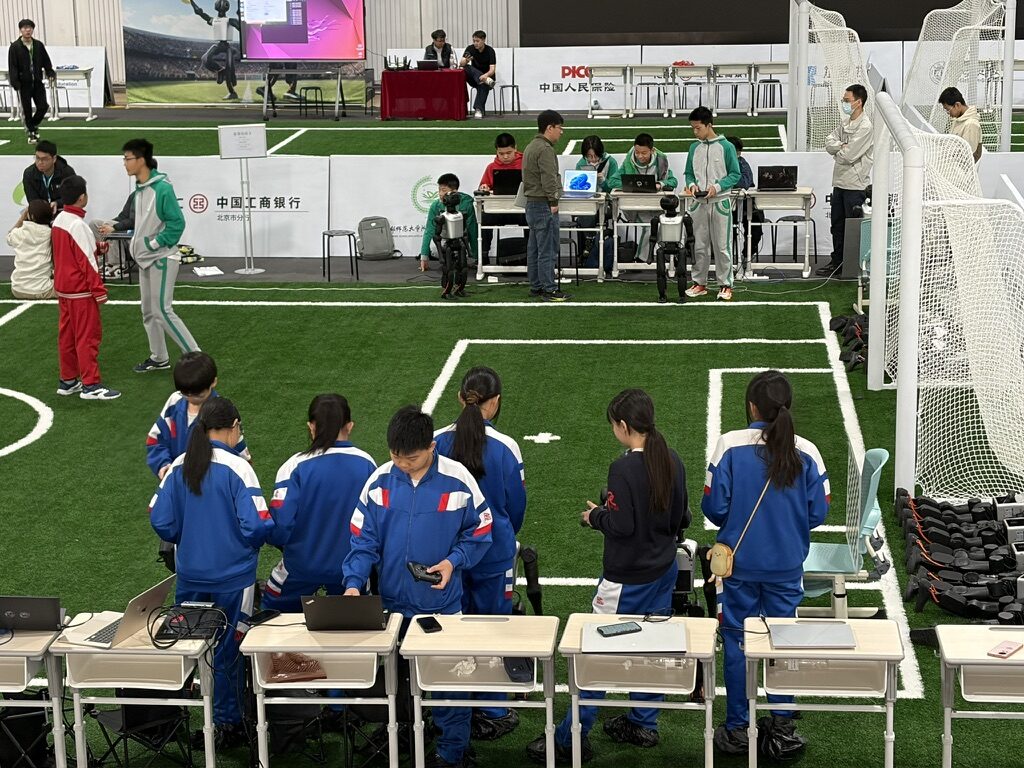
The format was a full competition ladder: eligibility check, Swiss-round qualifiers, group stage and finals. Each team fields five humanoid robots at once, following referee-machine commands through kick-off, attack-defence transitions, substitutions and foul handling, with defined state commands, substitution rules and penalty standards throughout.
What the students remember most is everything around the ninety seconds of play: version checks, configuration, network connections, camera and main-program start-up, log inspection, then localisation tests, equipment checks, battery swaps and pitch acclimatisation right before walking on. When a robot fell, lost localisation or a module misbehaved mid-match, they had to read the situation and fix it within the competition's procedures. Humanoid robot soccer is not a technology demonstration — it is software development, system debugging, hands-on engineering and teamwork, all at once.
PCMS-HRG squad
Coaches
- Lao Kun Wa劉冠華
- Lam Kin Un林建源
- Lei Mou Hong李武鴻
Students
- Wu Iat Cheng胡溢晴
- Lam Si Ioi林思睿
- Hoi Wai Kio許惠喬
- Yao Yi Chen姚怡辰
- Lei Pui Weng李沛穎
- Lei Ut Ieng李悅瑩
- Mui Lek Hou梅力昊
- Kwan Chi Cheng關芷晴
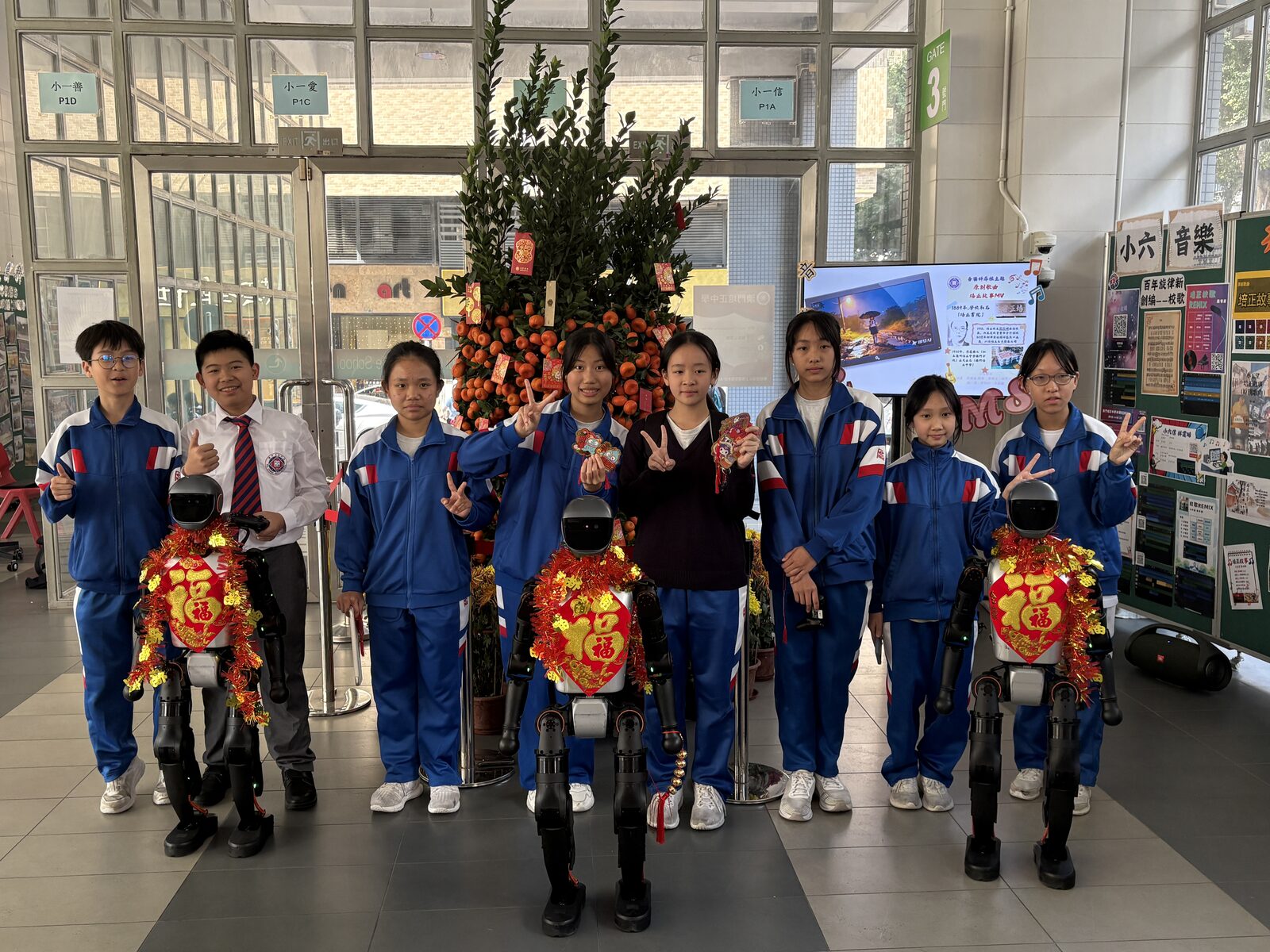
Chinese New Year Performance
To mark the Lunar New Year, PCMS-HRG staged a special humanoid robot performance for the school — a festive showcase, and a genuine test of the team's progress in motion programming and choreography.
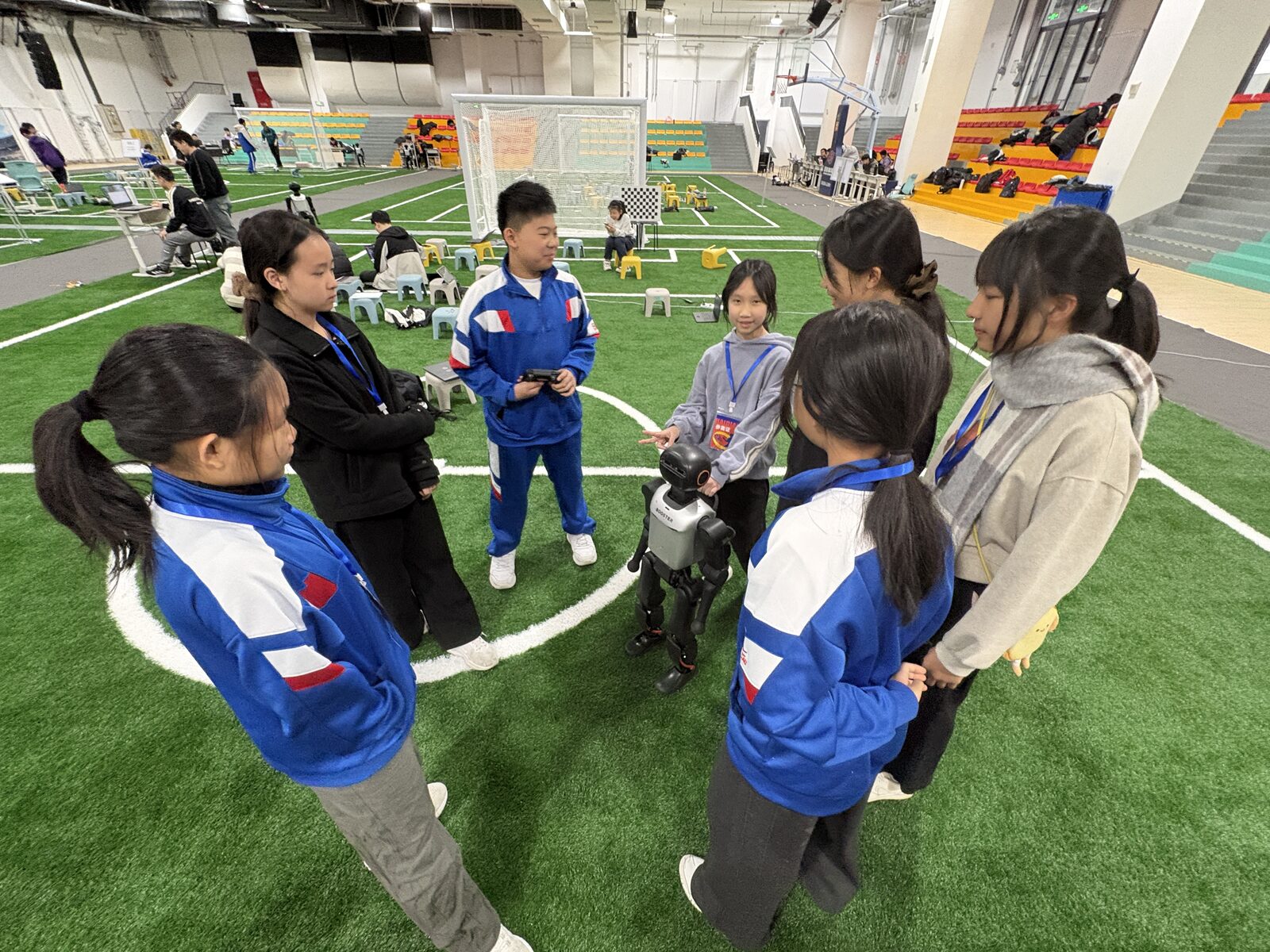
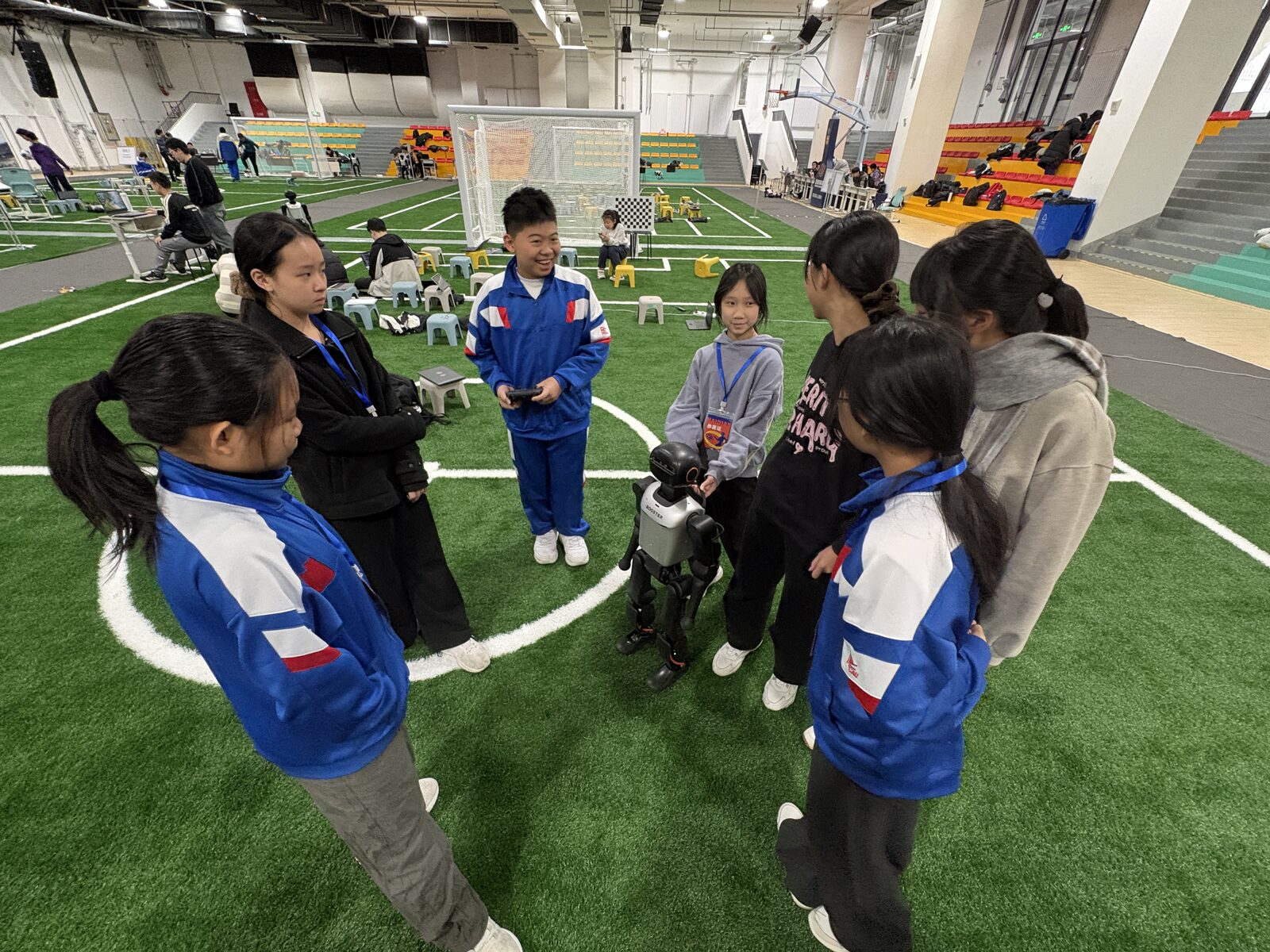
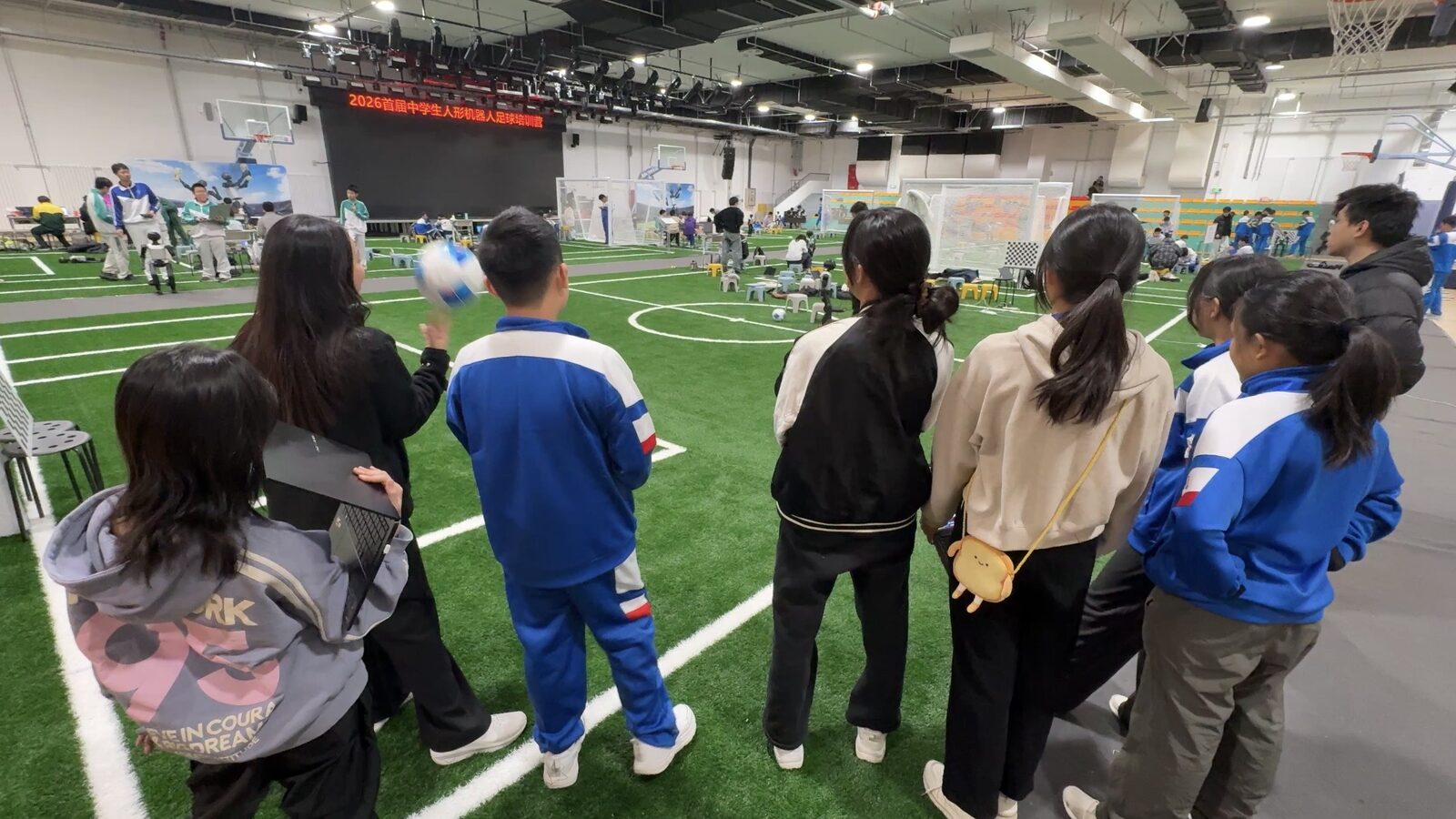
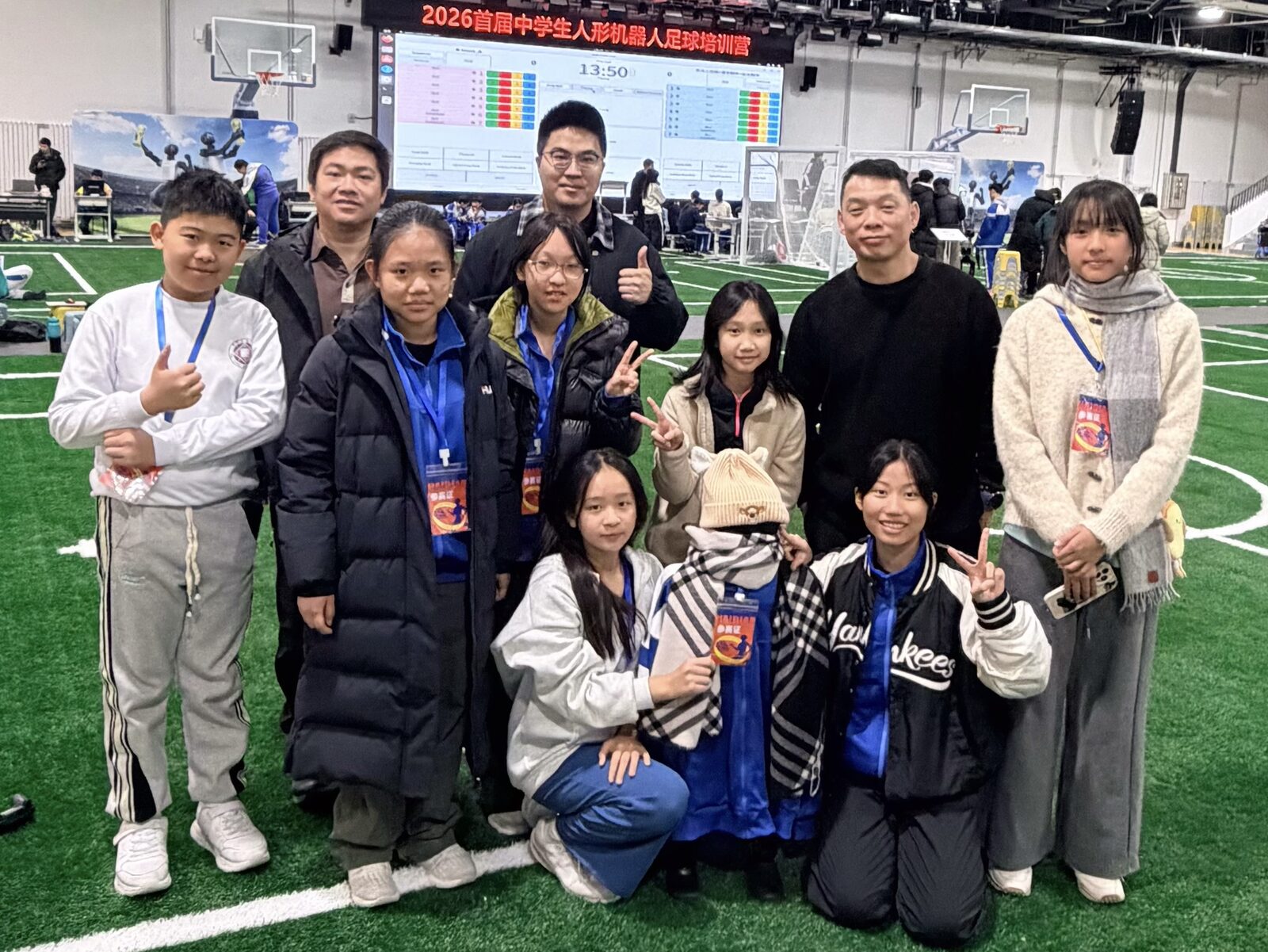
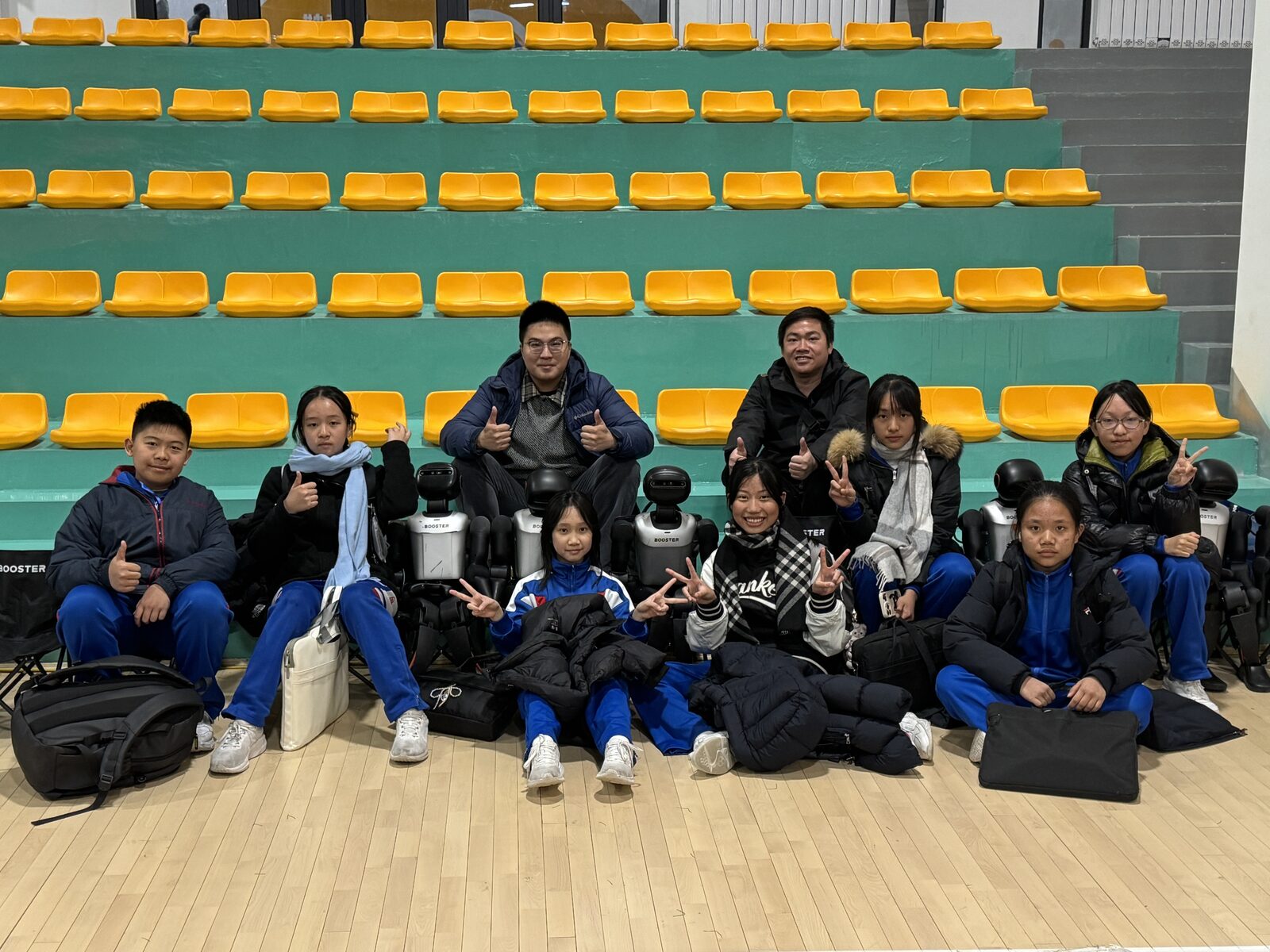
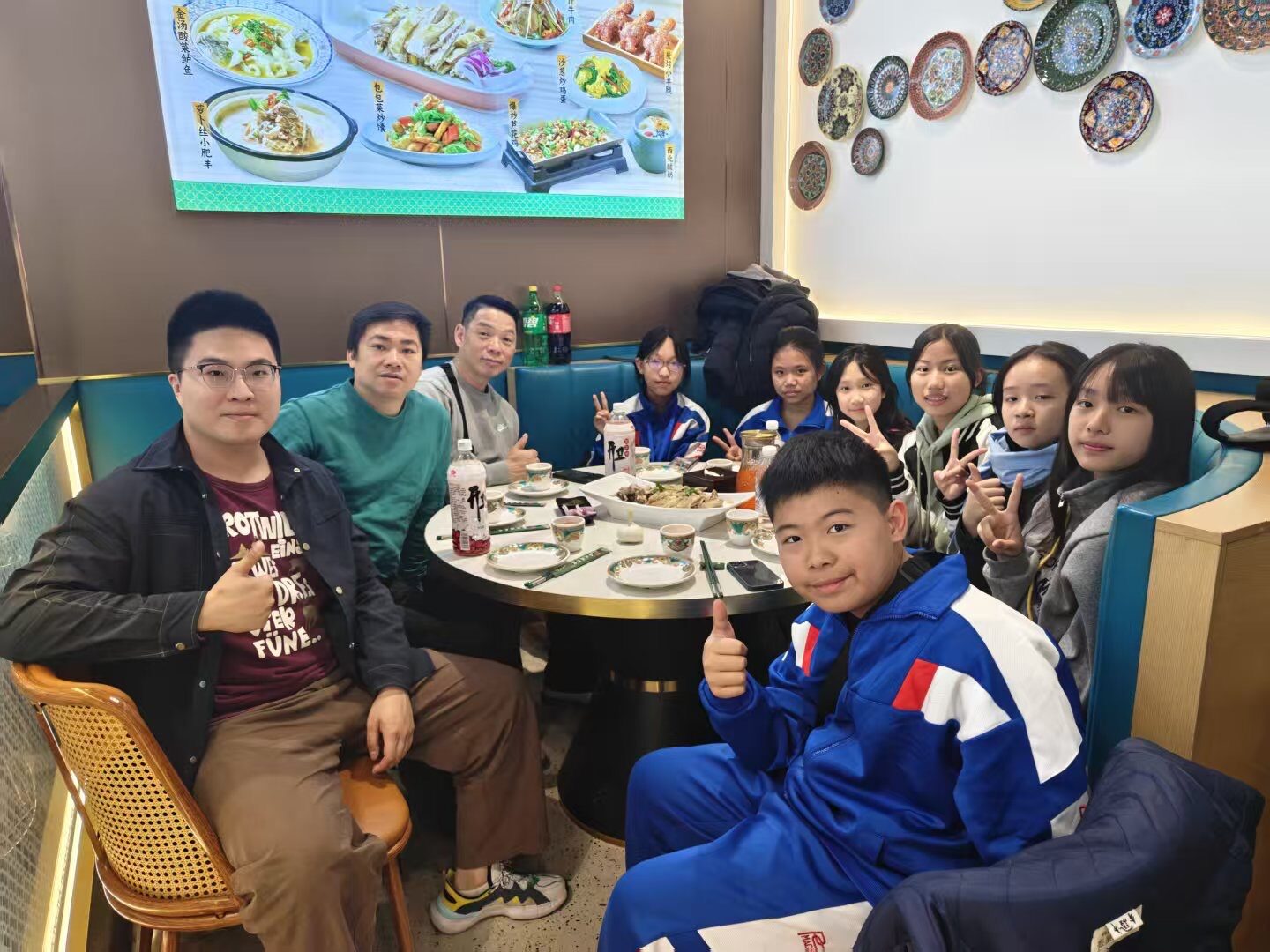
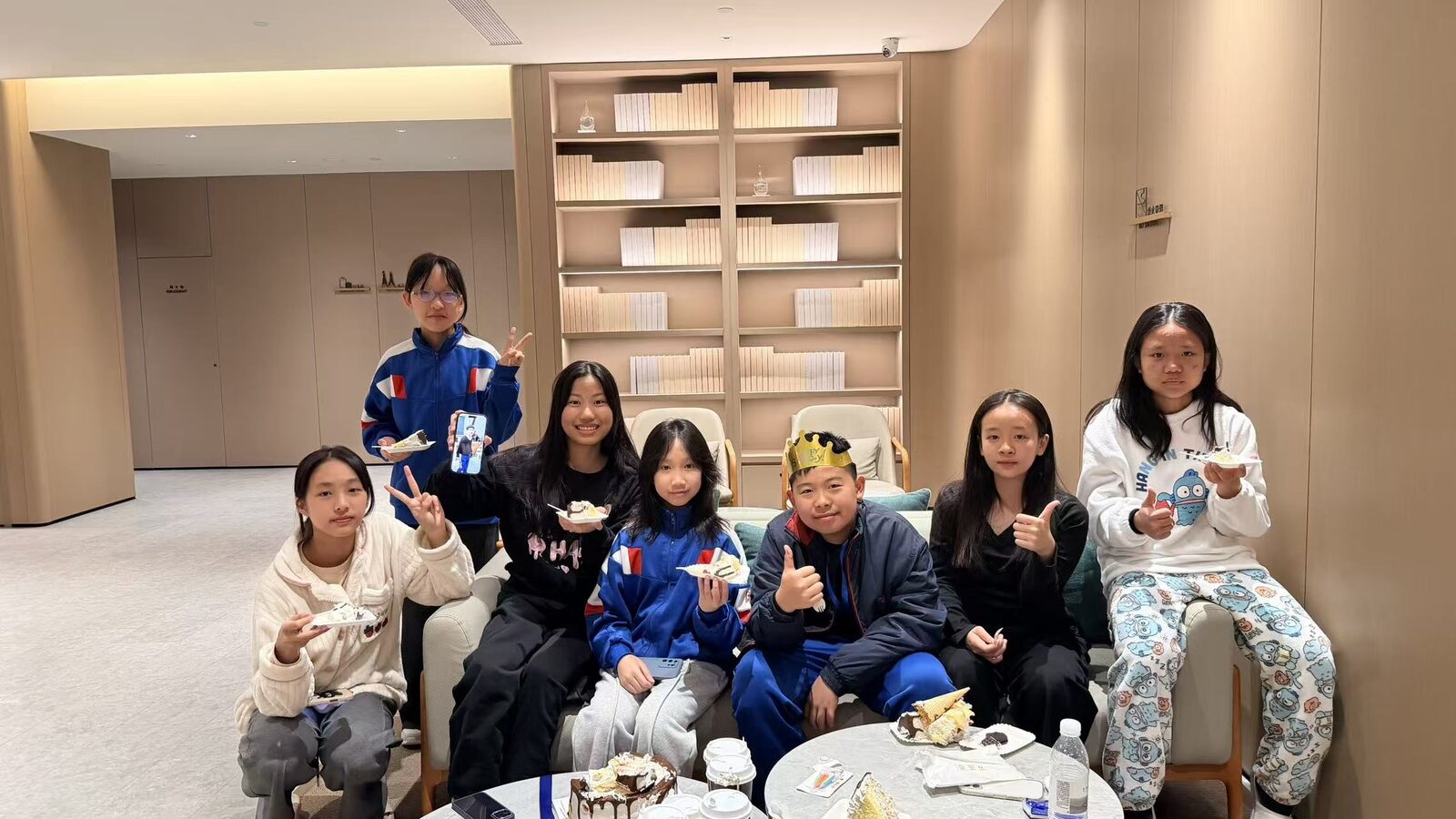
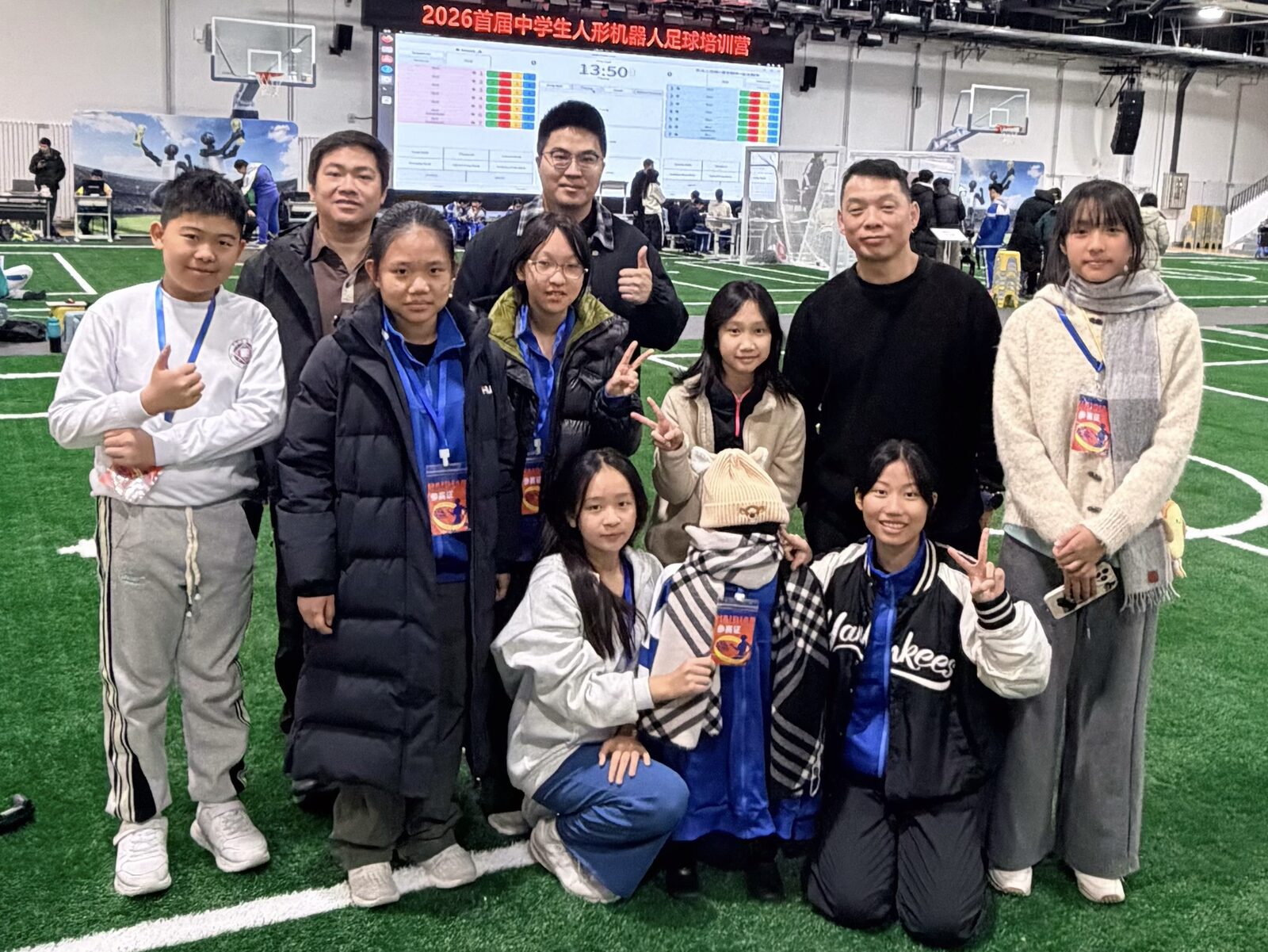
Beijing Training Camp — Middle School Humanoid Soccer League
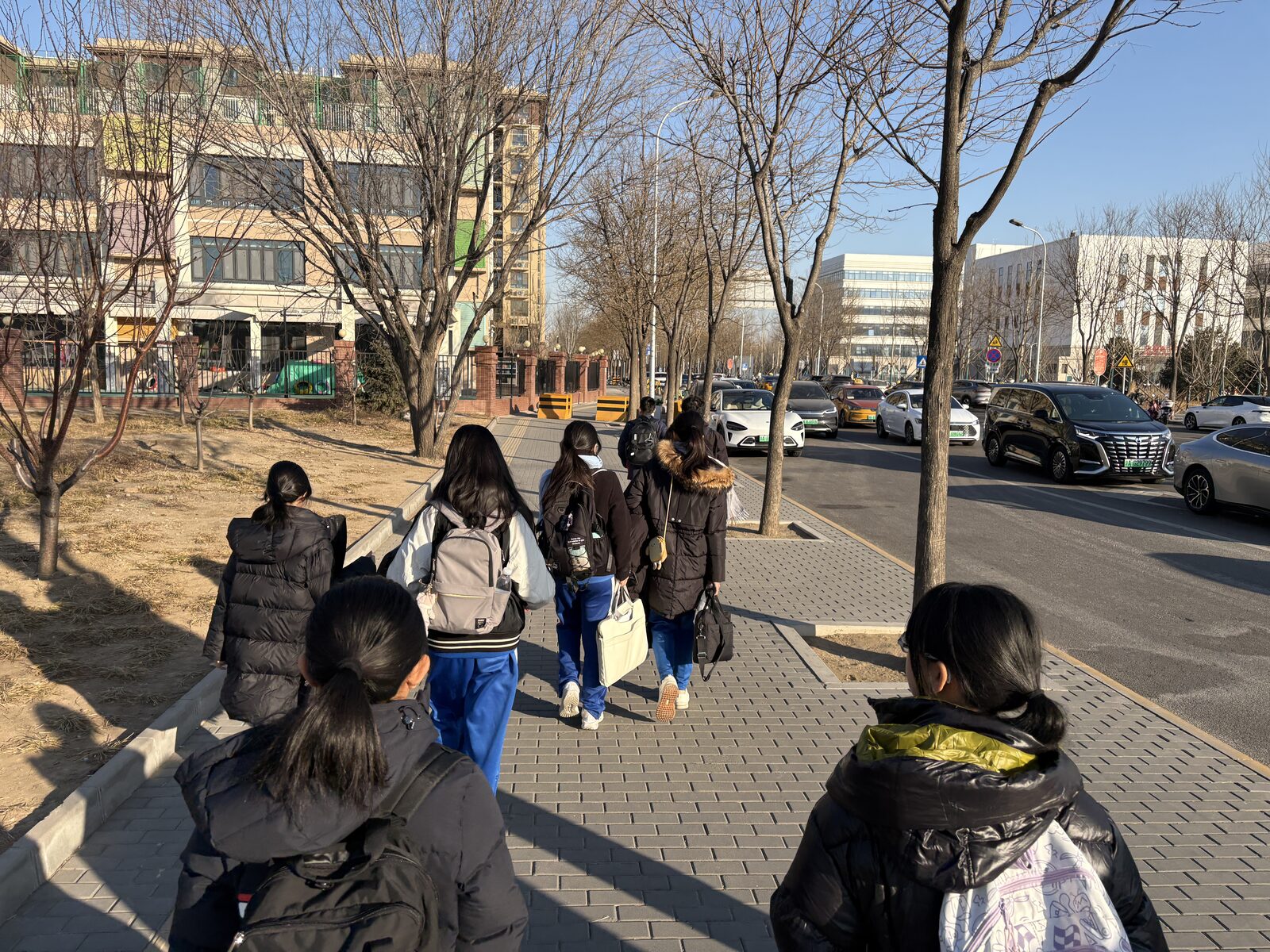
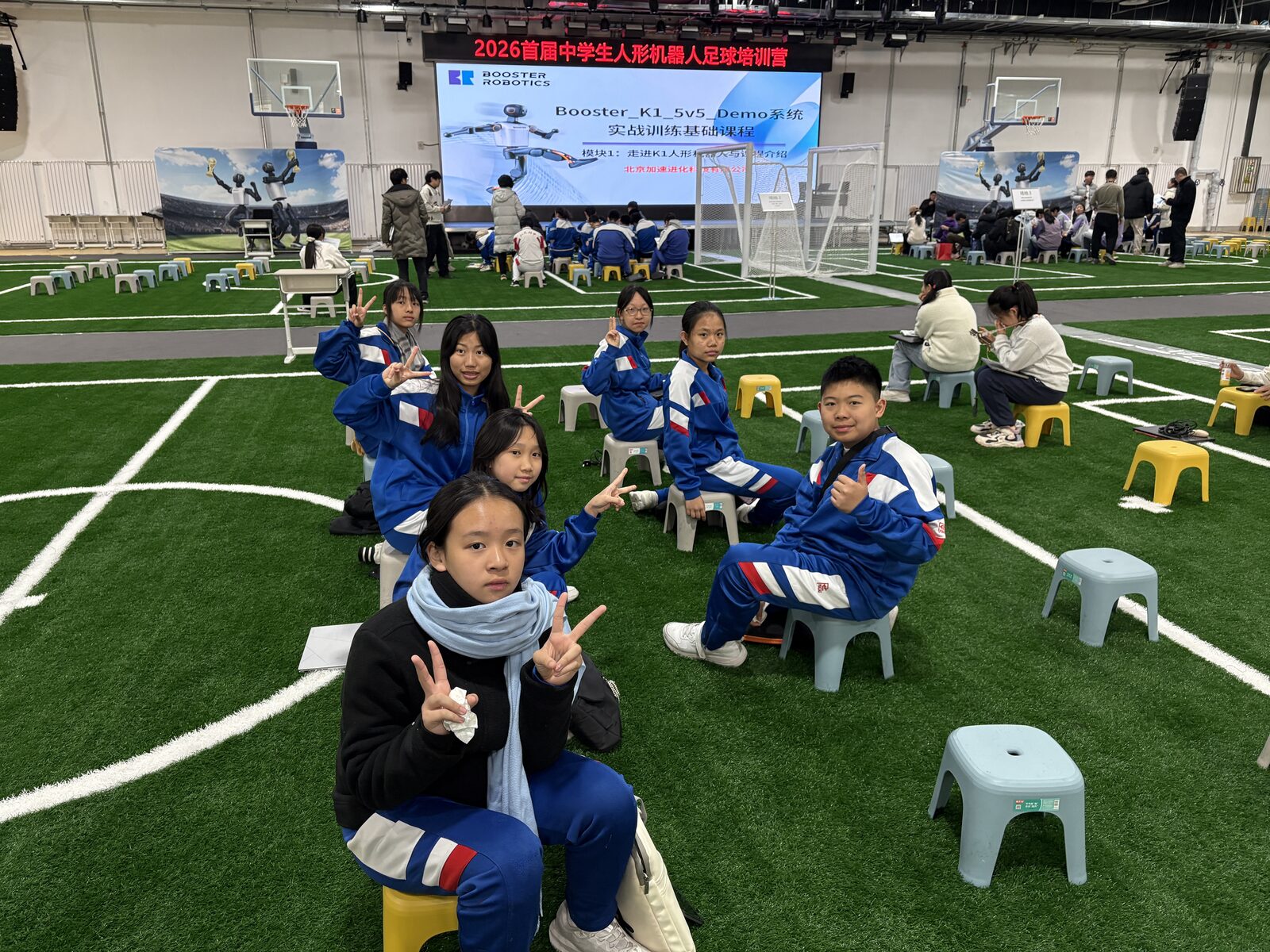
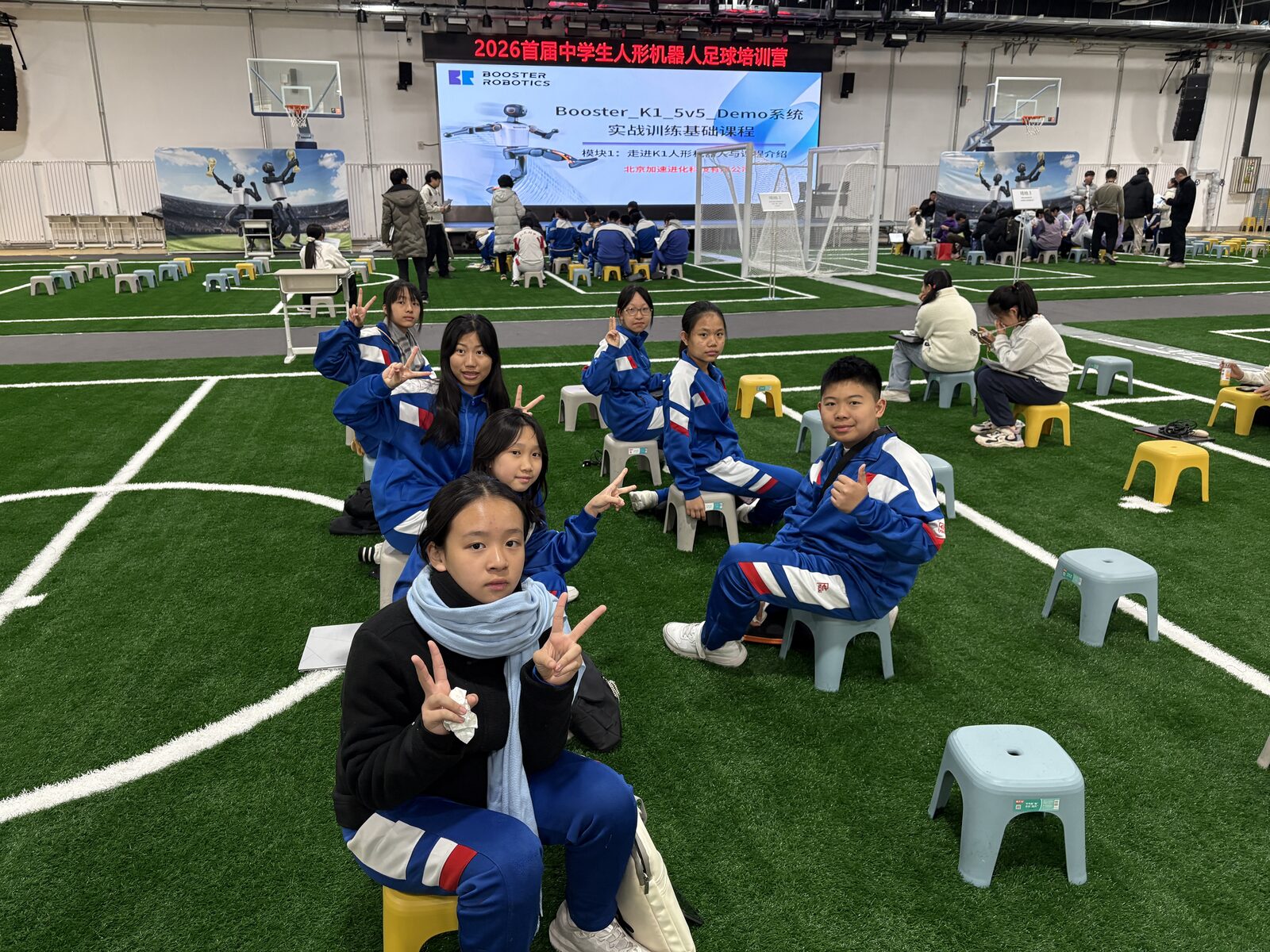
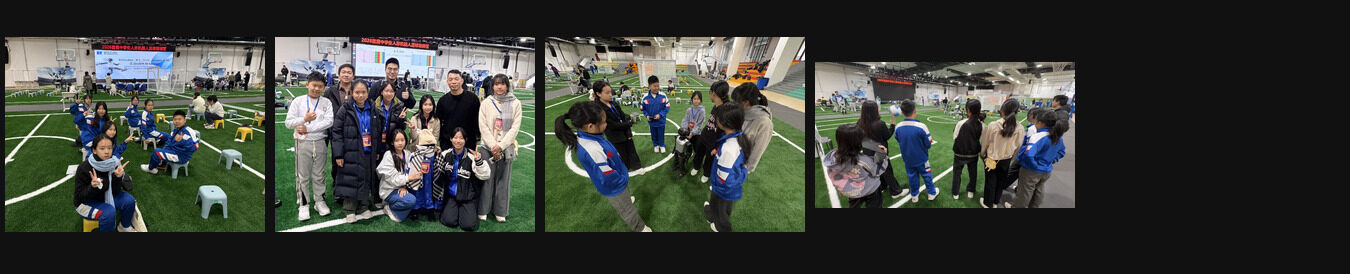
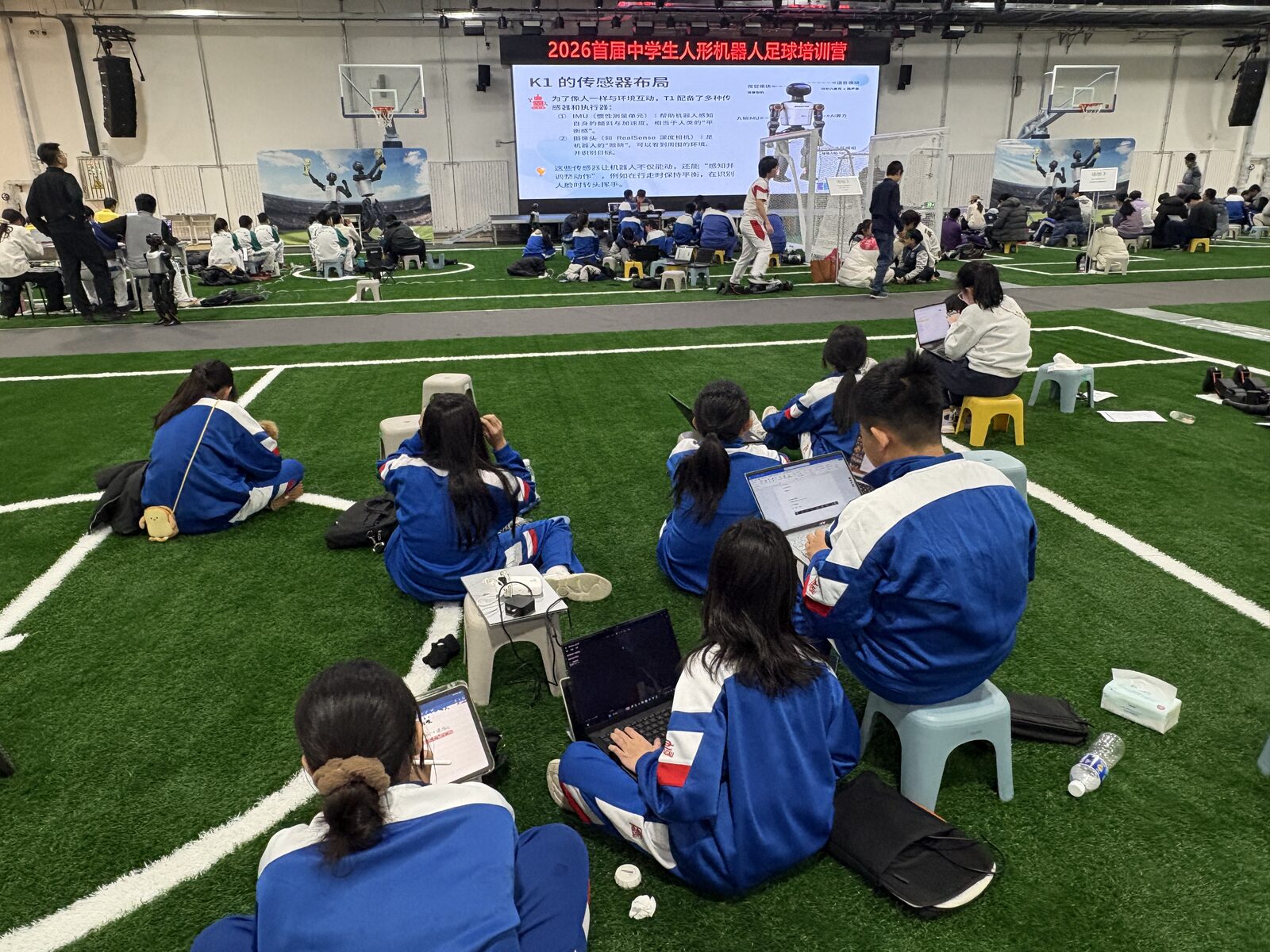
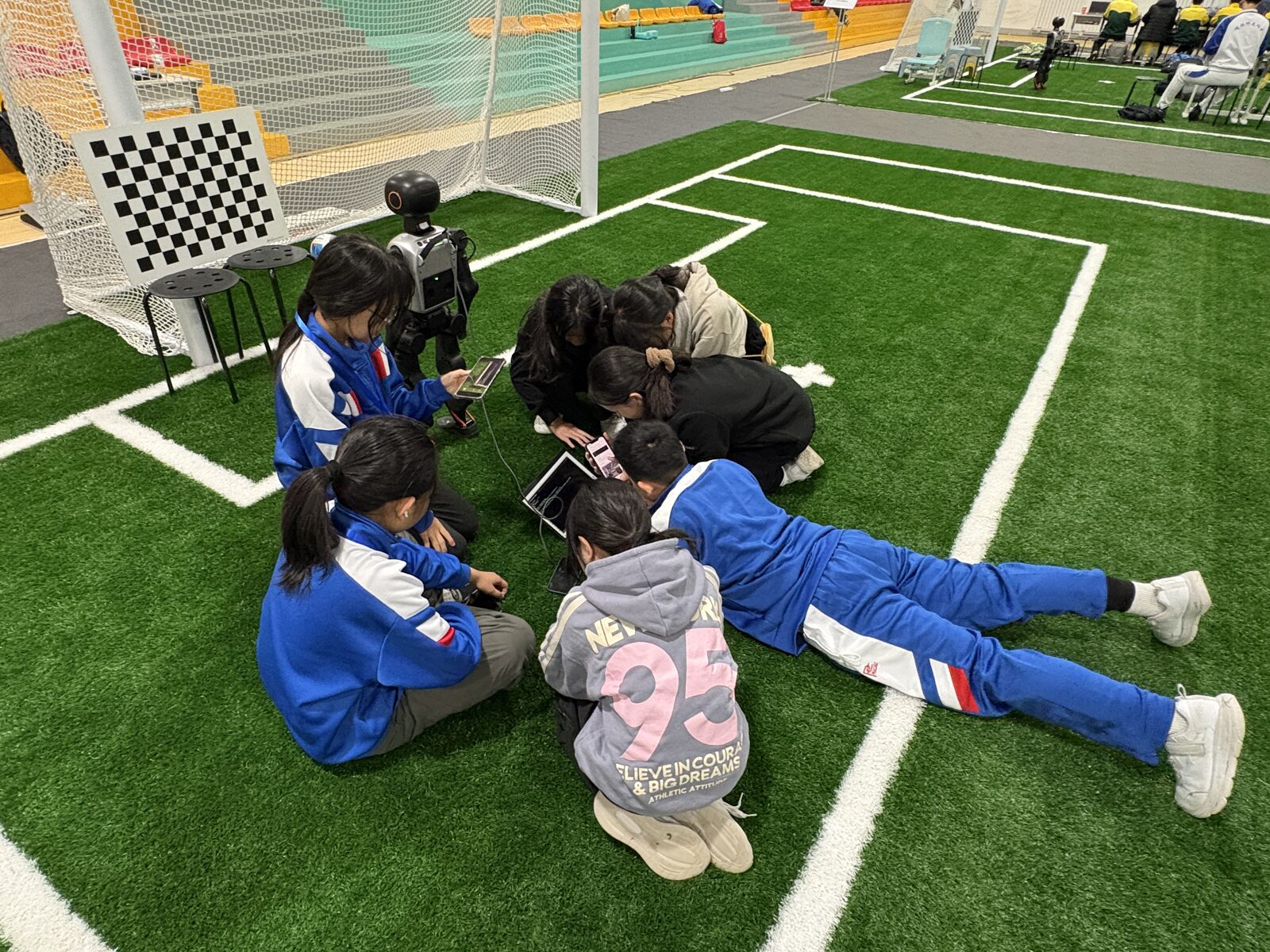
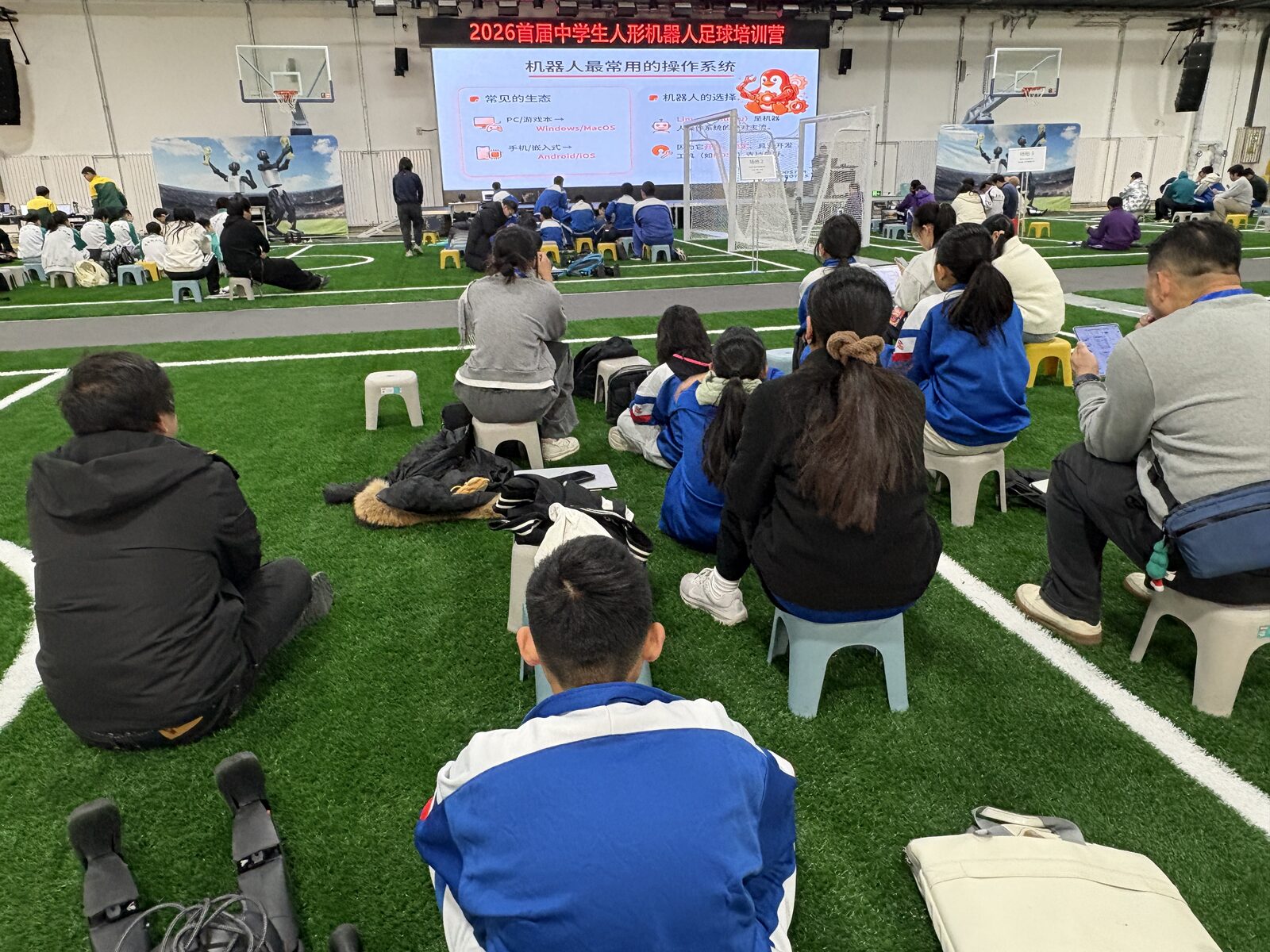
Booster Robotics invited PCMS-HRG to Beijing for the training and invitational matches attached to the first Middle School Humanoid Robot Soccer League — recognition of the school's work in humanoid robot development and robotics education, and a rare chance for students to learn, build and demonstrate at this level.
Booster K1 robots were provided for the duration. Training ran systematically through the full competition stack: hardware structure and safe handling, development environment and ROS 2 deployment, YOLO inference and visualisation, behaviour-tree decision-making with striker and goalkeeper strategies, then multi-robot communication and cooperative match play — building step by step toward the ability to run a complete humanoid soccer match independently.
The camp gathered leading secondary school teams including the high schools affiliated to Tsinghua University, Peking University and Renmin University, and Beijing No. 101 Middle School, giving students the chance to measure themselves against strong opposition and learn from them directly.
PCMS-HRG squad
Coaches
- Lao Kun Wa劉冠華
- Lam Kin Un林建源
- Lei Mou Hong李武鴻
Students
- Wu Iat Cheng胡溢晴
- Lam Si Ioi林思睿
- Hoi Wai Kio許惠喬
- Yao Yi Chen姚怡辰
- Lei Pui Weng李沛穎
- Lei Ut Ieng李悅瑩
- Mui Lek Hou梅力昊
- Kwan Chi Cheng關芷晴
Regular Training Sessions
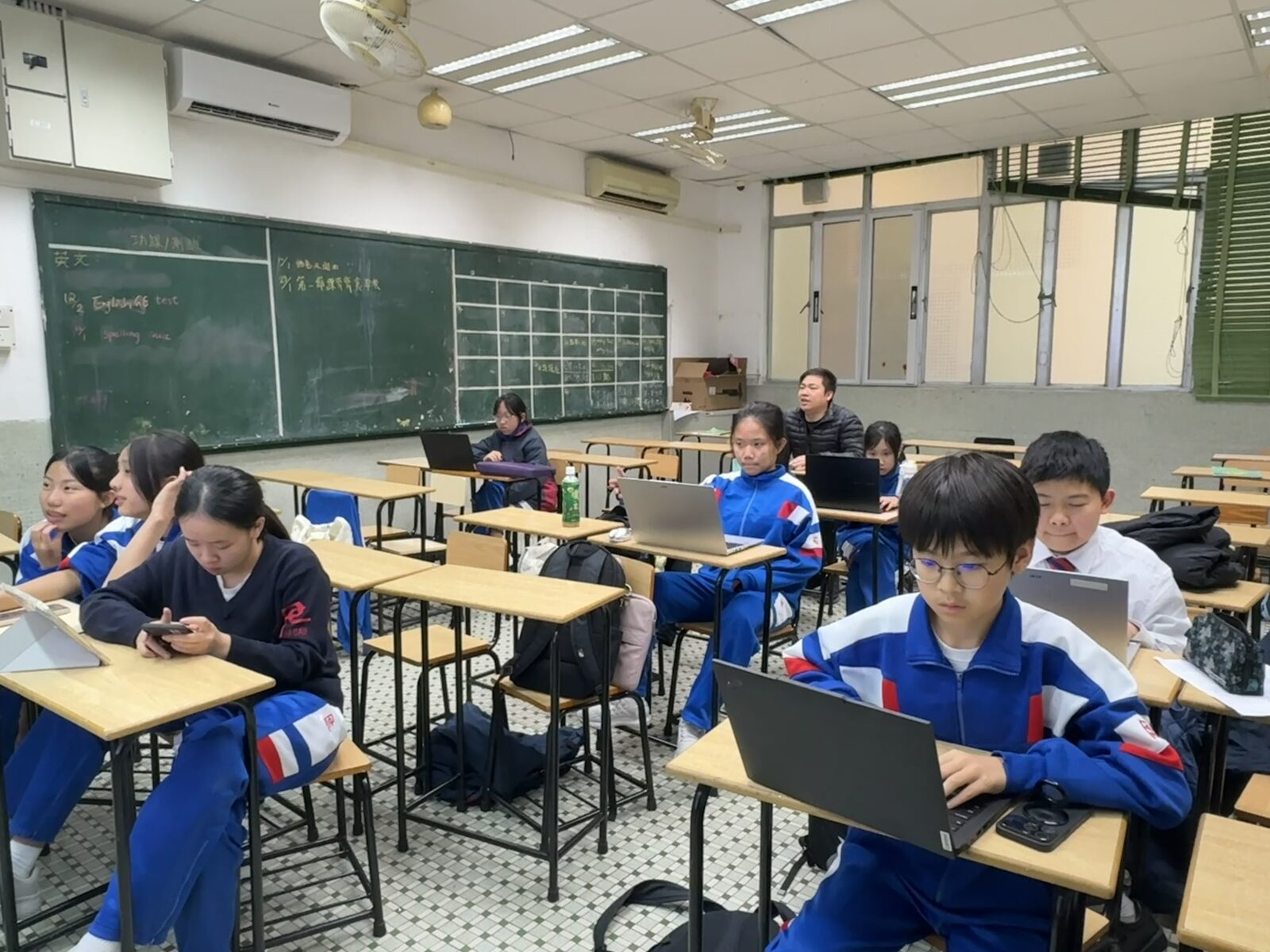
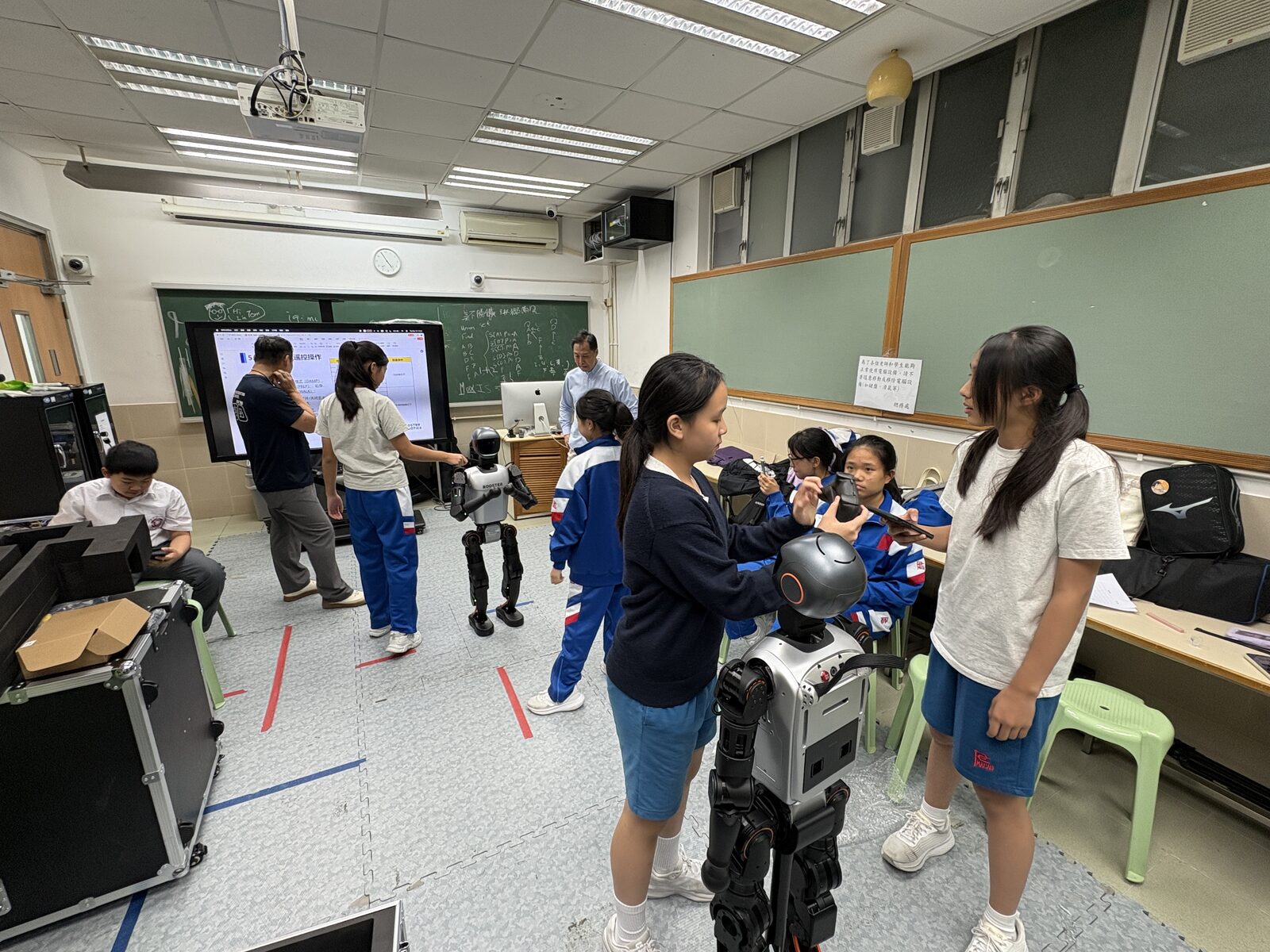
Weekly lab sessions are the backbone of everything else on this page. Members work through robot programming, motion tuning, soccer strategy and hardware maintenance — the unglamorous, repeated work that makes a competition weekend possible.
Primary School Morning Exercise Performance
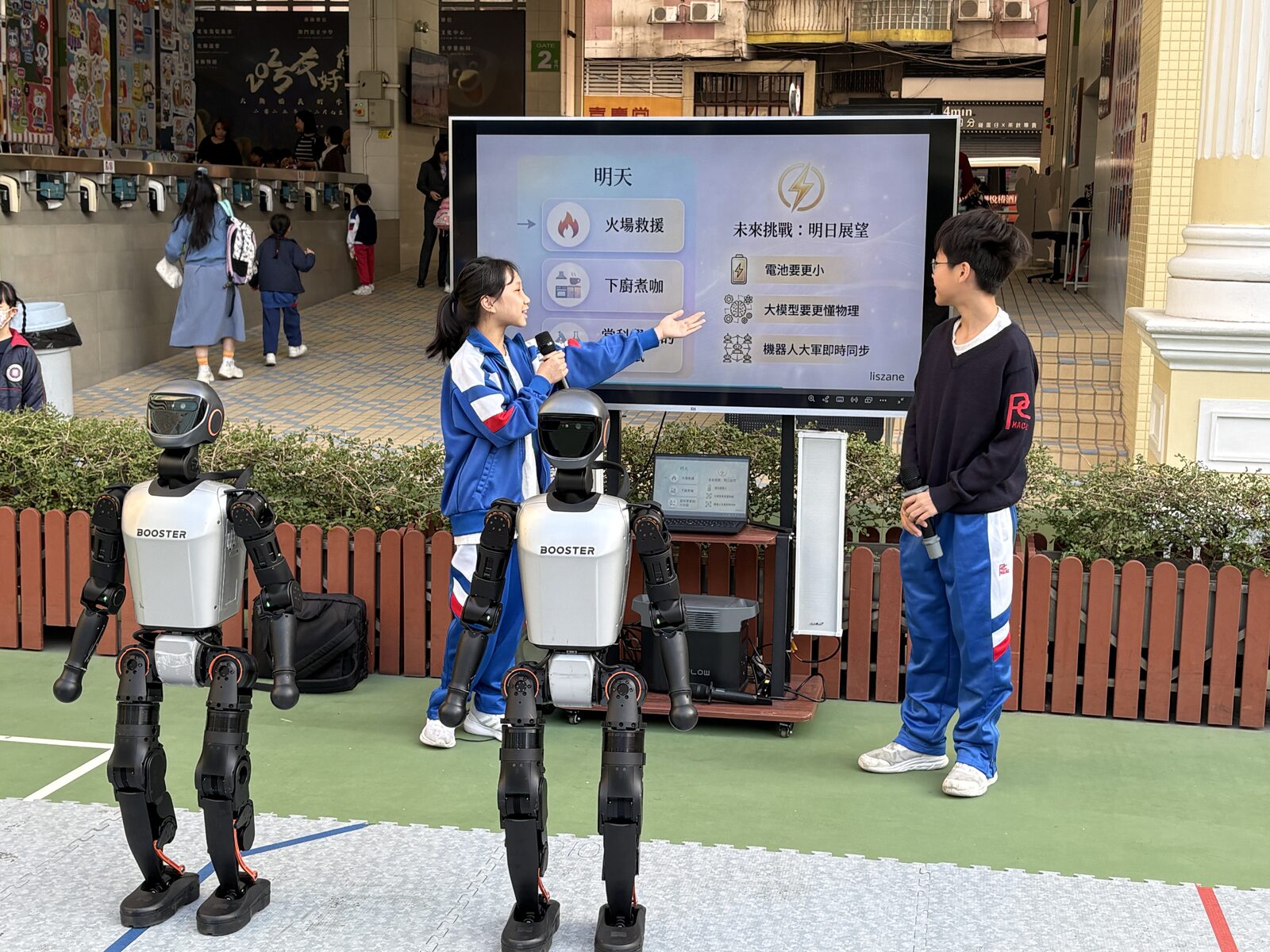
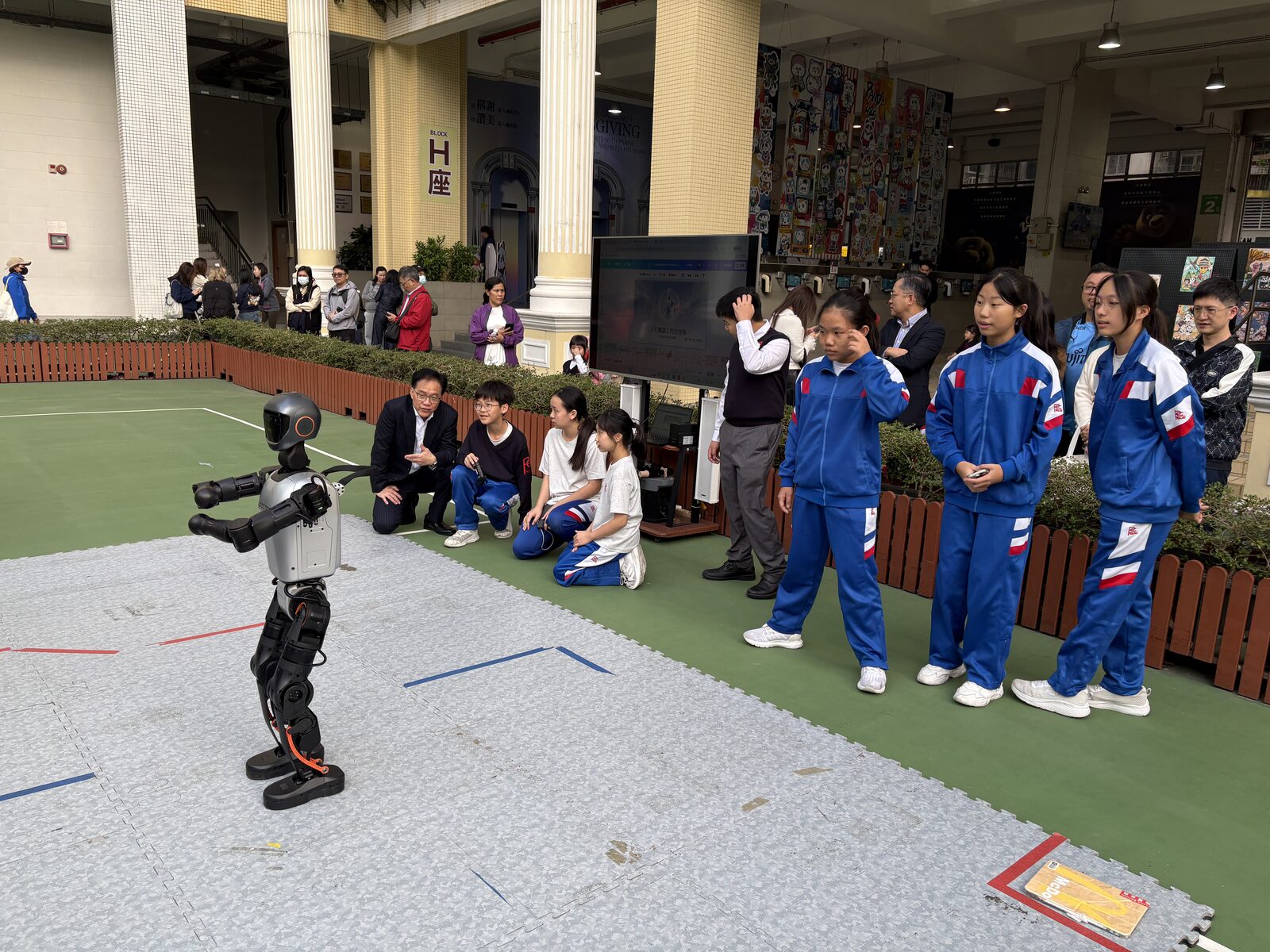
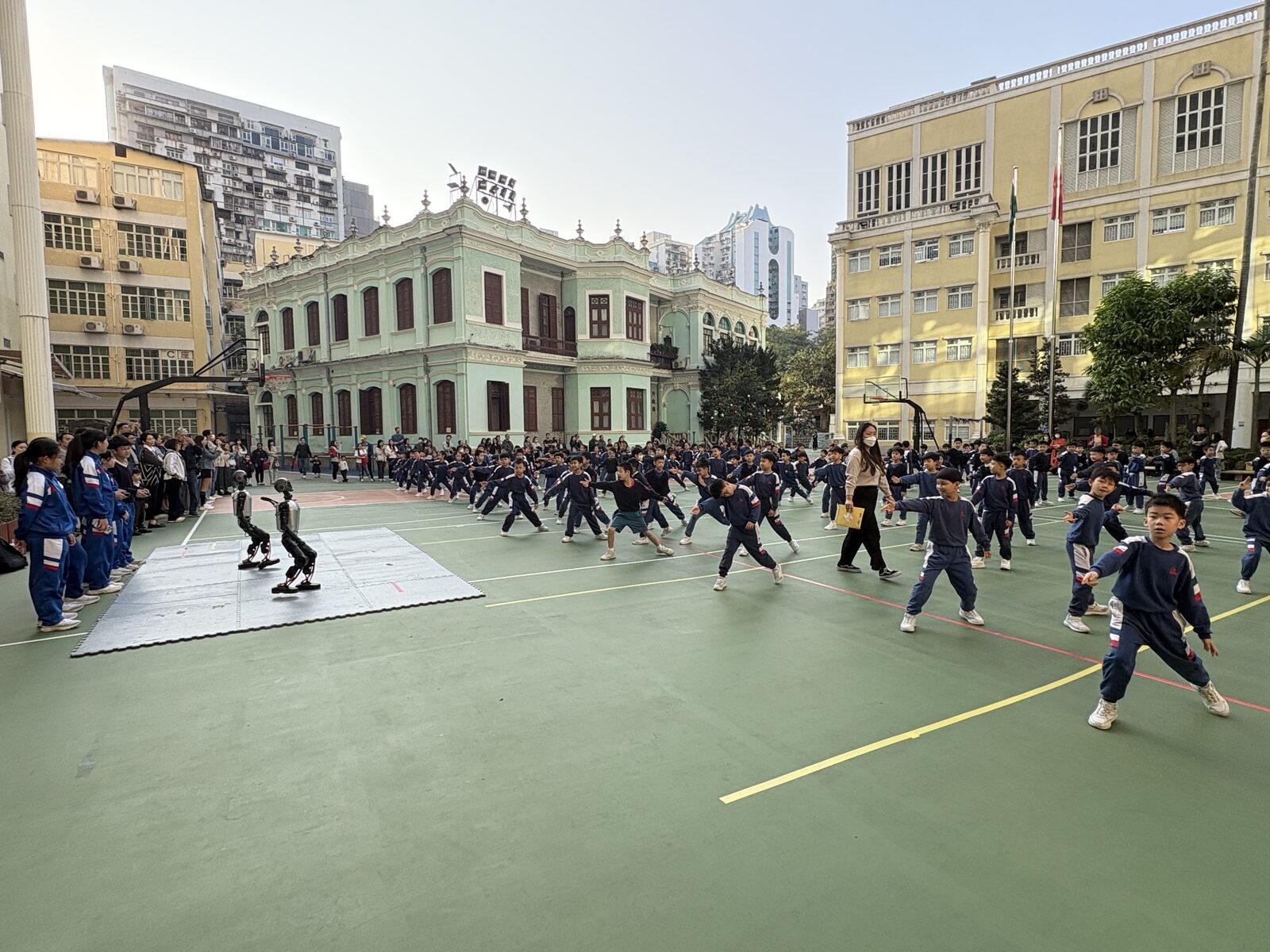
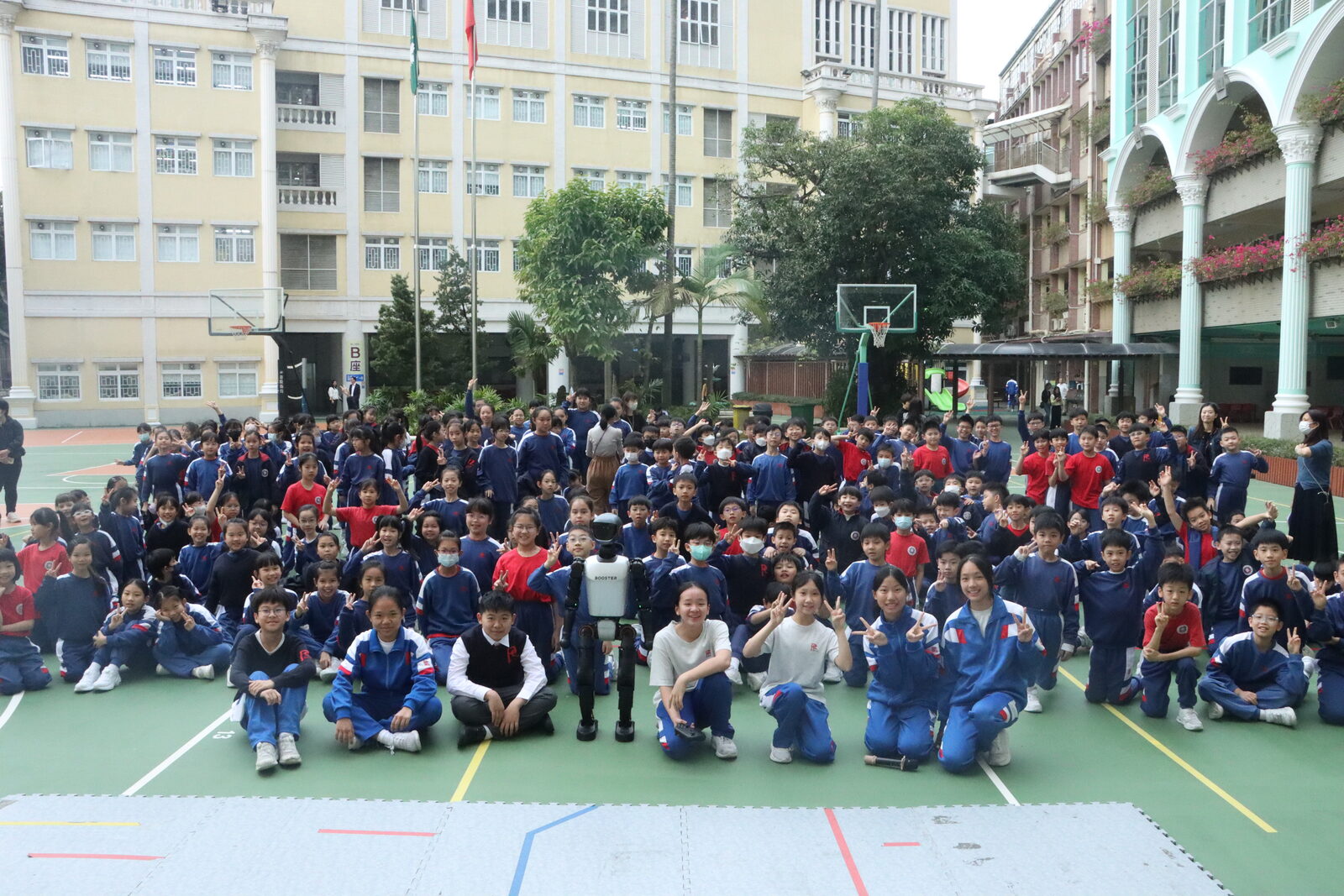
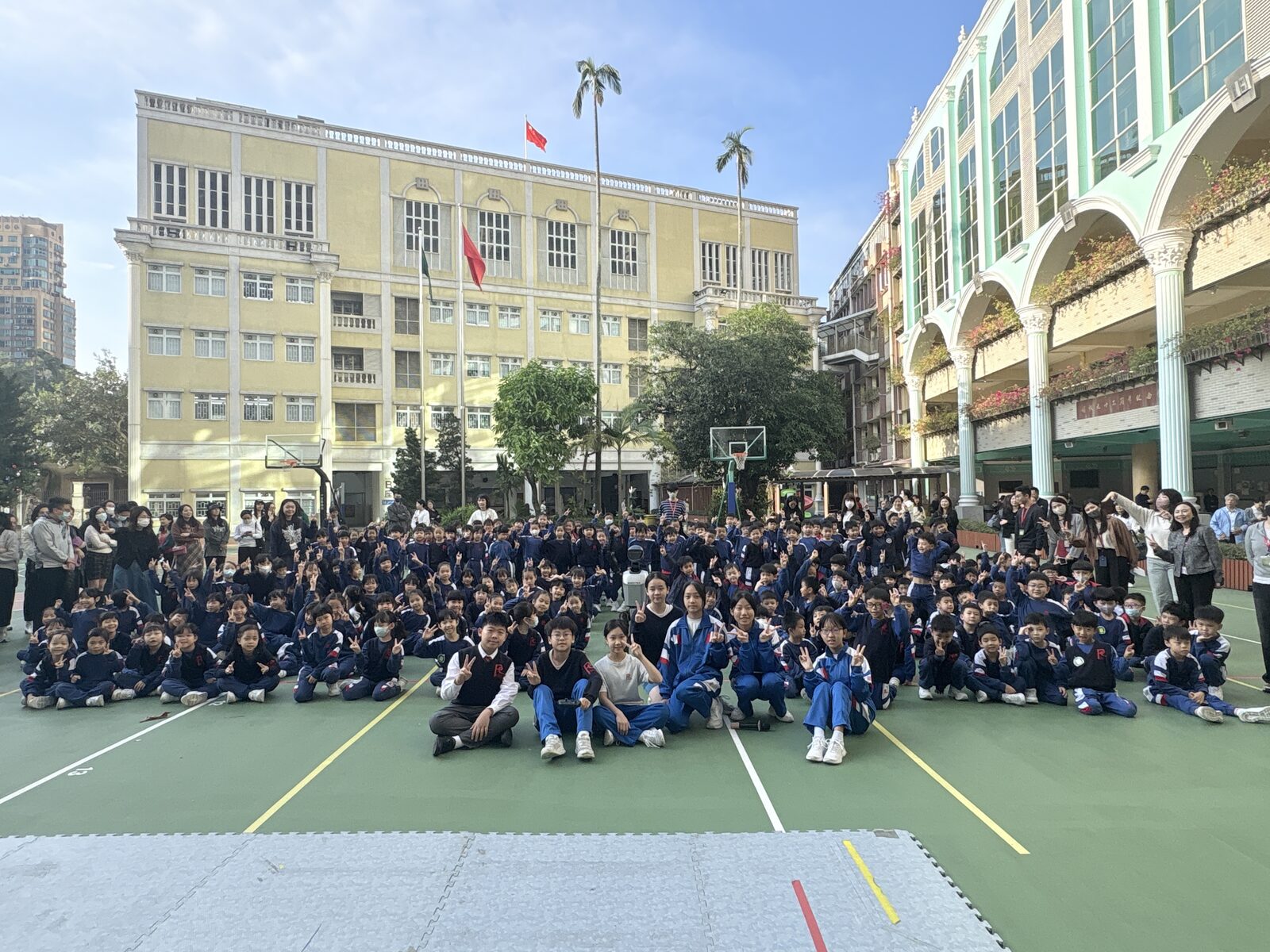
The team visited the affiliated primary school to introduce humanoid robots to younger students. During morning assembly they presented the robots, demonstrated dance routines and ran interactive activities.
The aim was simple: give students who will spend their whole lives in an AI-shaped world an early, hands-on look at what these machines actually do — and at the fact that the people building them are only a few years older than they are.
Booster T1 Unboxing — Day Zero
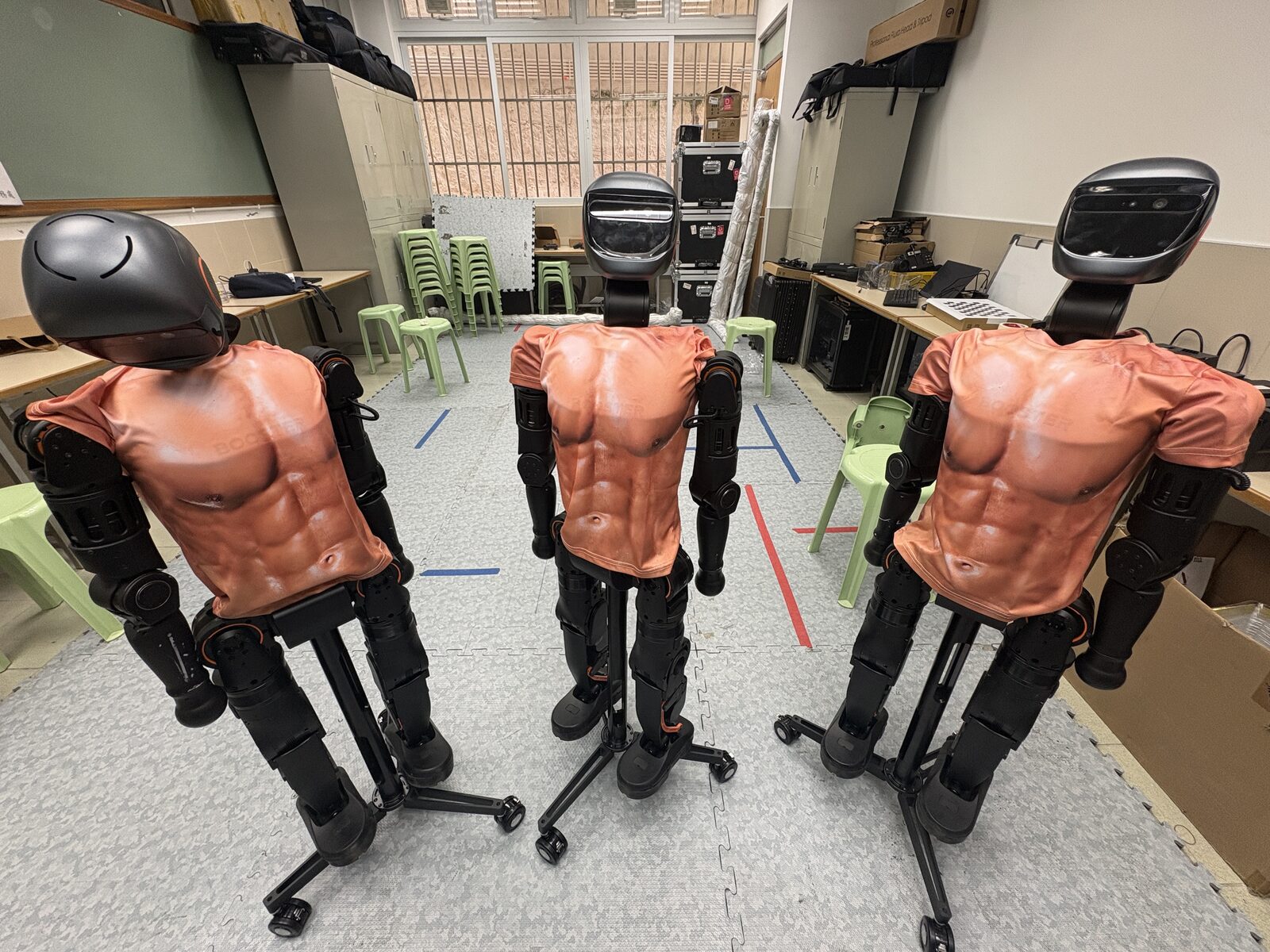
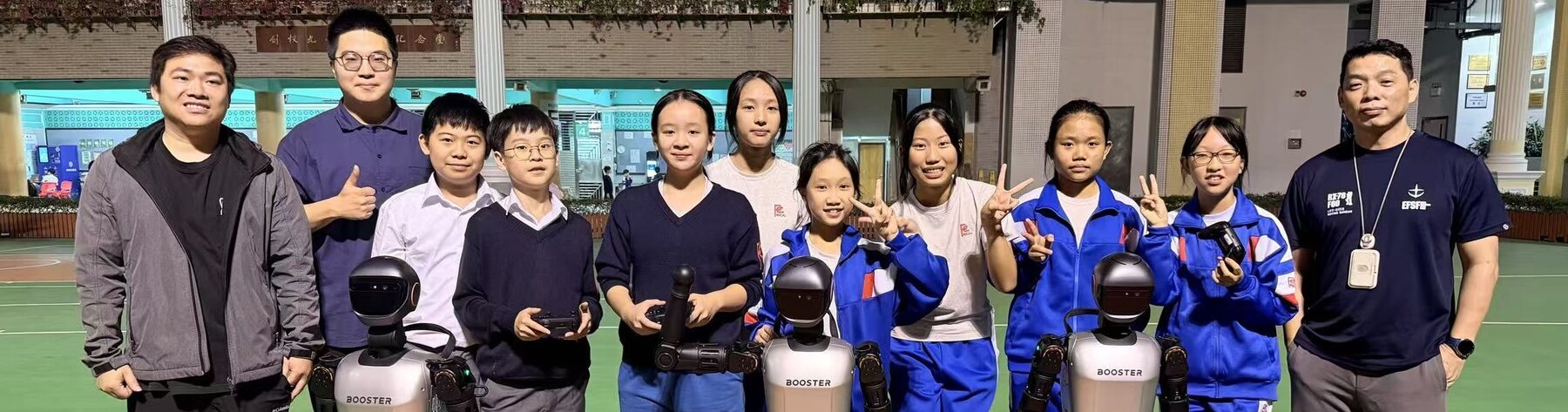
Three Booster T1 full-size humanoid robots arrived and were powered on for the first time. Everything documented on this page follows from this afternoon.
No activities match this filter.